

Article takeaways
- A successful garage sale takes more time than most first-timers expect–at least 3–4 weeks of planning to sort items, check local permit requirements, gather supplies, and build your advertising strategy.
- Some cities and counties have garage sale regulations and require a permit or license for garage sales, and some limit how many you can hold per year. Skipping this step can result in fines, so check local ordinances before setting a date.
- The most common pricing mistake is overvaluing your personal items. Aim for 10–25% of the original retail price, rounding to the nearest 25-cent increments for easy change-making, and be ready to negotiate down as the day goes on.
- Advertising with clear, well-lit photos on Facebook Marketplace, Nextdoor, and Craigslist can increase foot traffic, especially for big-ticket items that shoppers are specifically searching for.
- Plan your unsold items strategy before the sale starts so rejected items don’t drift back into your home: make online listings or schedule a donation center or storage unit pickup.
Having a successful garage sale takes more than dragging boxes of your old household items to the driveway. You’ll need to check local regulations and permit requirements, gather your supplies, price tag your items strategically, and promote the yard sale with photos. Starting 3–4 weeks before the garage sale date to give yourself plenty of time.
If you give yourself enough time to plan so you can get all that right, yard sales are an effective way to declutter before moving, or to reclaim your living space during spring cleaning, while putting some extra money in your pocket.
Garage sales can function as estate sales to help you release a loved one’s belongings after they pass. I’ve even heard of people funding whole home renovation projects by holding yard sales, but again, they got the preparation right.
Regardless of your own personal reasons for holding a garage sale, the planning, pricing, and permit process and layout tips are the same.
Our helpful guide will walk you through how to prepare for a garage sale. We’ll review how to plan and time your yard sale, how to navigate garage sale permit requirements in your area, and offer garage sale advice and tips. We’ll provide an office supply checklist of things you can actually use, including the ones people forget and how they come in handy.
We’ll cover how to do a yard sale hat hits in terms of pricing and displaying your items, advertising using photos for online listings, and utilizing sign areas that drive traffic.
We’ll cover how to handle the day itself, what to do with everything that doesn’t sell. And last but not least, how Storage.com can help you find short-term storage to keep your house decluttered between yard sales.
How to Prepare for a Garage Sale: Step-by-Step Checklist
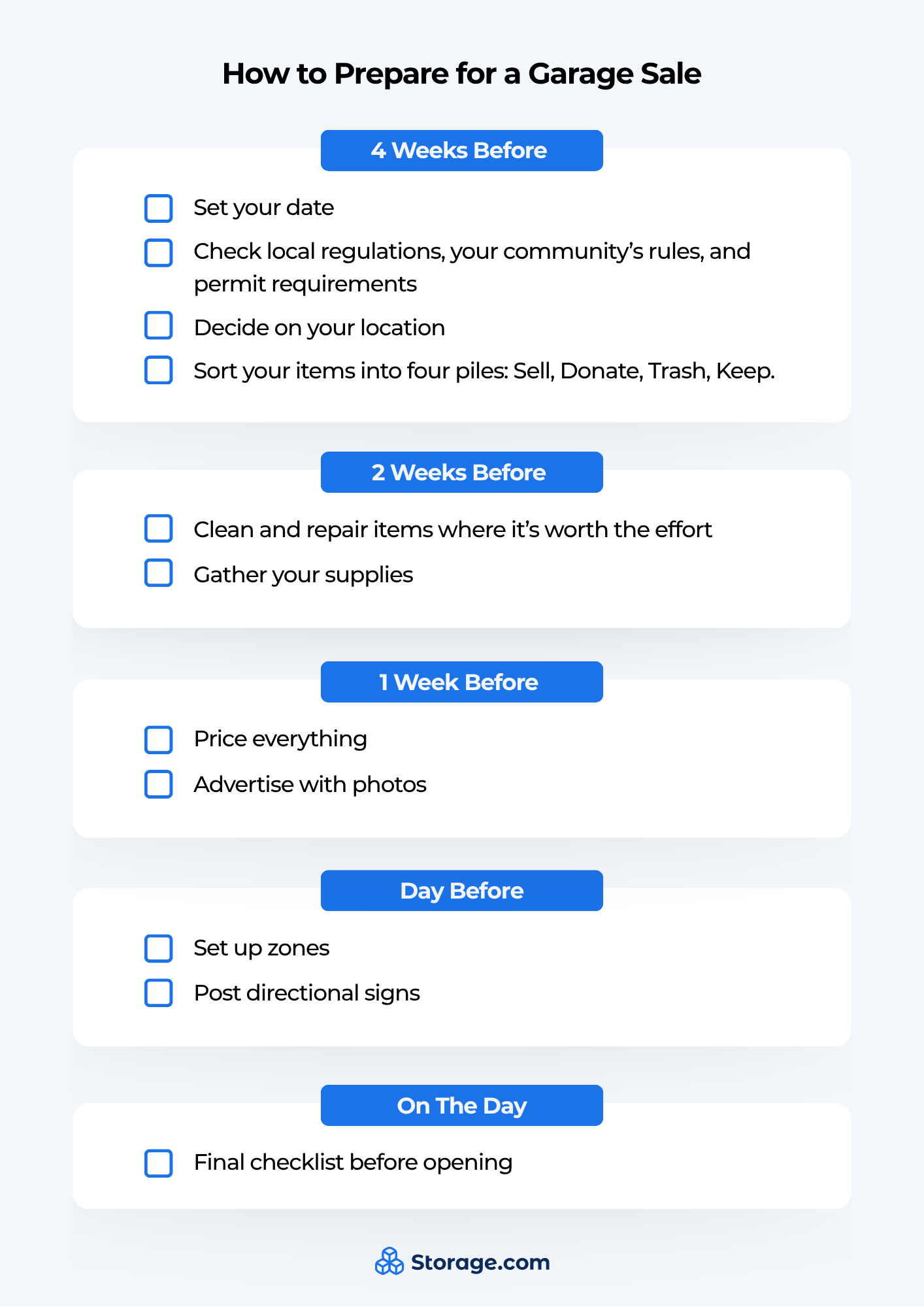
Yard sale pros plan the most successful garage sales at least 3–4 weeks out. Focus on speedy decluttering during the first week, permits and supply gathering on the second, pricing and advertising on the third week, and use the final days to set up and optimize your day-of logistics.
Here’s how to do a yard sale like a pro:
4 Weeks Before the Yard Sale
- Set your date. Saturdays are peak garage sale days, when foot traffic peaks between 7 AM and noon. You can make a Friday–Saturday two-day sale work in your favor if you have a larger volume of items. Aim for spring and summer through early fall. Avoid major local events and holiday weekends. And make sure there aren’t any competing community center sale events the same weekend.
- Check local regulations, your community’s rules, and permit requirements. Some cities and counties require a permit to hold a garage sale, but others don’t. Spend about 15 minutes looking up the laws in your state and county and applying for any permits they require. 15 minutes is nothing compared to facing a fine or a forced shutdown on sale day after spending 4 weeks planning and organizing. Also, check with your HOA and living community to see if there are any regulations you’ll need to follow. So you can plan your layout accordingly.
- Decide on your location. Your own driveway or yard is the default, and for good reason–it saves you transportation costs and setup time. But if you live in an apartment, have limited street visibility, or want to attract foot traffic with more consumeristic tendencies, consider teaming up with a friend or family member who has property in a more ideal location. You can also join in on a community flea market or a neighborhood group sale.
Pro Tip: Don’t hold your garage sale the same weekend as a nearby neighborhood or community sale unless you’re joining forces. Teaming up with one or two neighbors or friends for a multi-household sale can create more variety, draw more shoppers, split the setup labor, and give you backup coverage throughout the day. Just make sure you keep your cash separate and agree on pricing norms upfront. But competing with neighbors for the same buyers splits your traffic.
- Sort your items into four piles: Sell, Donate, Trash, Keep. Once they’re sorted, take your donations and trash piles straight to the donation center and dump. Donation items are things that might be useful but aren’t valuable for selling. Prep your sell items for the yard sale, and organize your keep items into their permanent homes. If you’re having trouble deciding what to keep or get rid of, here’s a simple rule: if you haven’t used it in the past 12 months, it goes. Organize through each room, closet, andstorage area systematically.
2 Weeks Before the Yard Sale
- Clean and repair items where it’s worth the effort. Take it from me, this next garage sale advice tip is worth following. Having dirty or broken-looking items on display can cost you buyer confidence. Your buyers will even start to question the price tags and functionality of your nice, high-value items if they’re sitting next to dingy, busted goods. Wipe down electronics, wash or steam clothing, and do minor repairs like replacing missing screws, tightening loose hardware on anything mechanical. The goal here isn’t restoration, it’s presentation.
- Gather your supplies. You want to have everything you need bought, paid for, prepped, and ready 2 weeks before the sale day. That includes folding tables or other display tables, price stickers or small price tags, a cash box, offsite directional signs, and shopping bags for customers — see the full Garage Sale Supply Checklist below for everything you’ll need.
1 Week Before the Yard Sale
- Price everything. This is a valuable layout tip I wish someone had told me before my first garage sale: Every item should have a visible price tag before sale day. Unmarked items slow down and frustrate your shoppers and pull you into conversations that take you away from finalizing transactions. You don’t want to spend the day in negotiation mode. You want to be in a friendly, fluid, and approachable place. Price everything a week before the yard sale, in 25-cent increments based on 10–25% of the retail price. And leave a little room to negotiate.
- Advertise with photos. Take some clear, high-quality photos of your 5–10 most valuable items. Be sure they’re well-lit. Post them to Facebook Marketplace, Nextdoor, local buy/sell Facebook groups, and Craigslist 5–7 days before the yard sale. Make a specific post with the price and a photo for each of the 5-10 items: “Vintage KitchenAid Mixer, $25.” Rather than offering to sell each item individually, you’re using this post to advertise your yard sale. Encourage your interested buyers to visit the garage sale on sale day, where they might buy a few other items as well. And if the items don’t sell, you simply leave the post up after the sale is over.
Day Before the Yard Sale
- Set up zones. Our first organization tip is to arrange your display tables, racks, shelves, and blanket areas by category the evening before, so sales morning isn’t chaotic. We don’t mean setting it all up outside and leaving it overnight. But group clothing, books, electronics, kitchen items, tools, and décor together and come up with a game plan for how to display each section. Put your highest-value, visually appealing, and unique and interesting items near the entrance or viewable from the street to stop drive-by traffic.
- Post directional signs. Make your temporary signs the day before the sale and hang them up with the yard sale dates, so people can see them and make plans to stop by. Hang them from street signs at nearby intersections the evening before if your neighborhood allows it, and leave them up until the sale is over. That said, keep in mind that some local regulations and HOA code enforcements have rules about sign placement and timing. Hopefully, you found these during your permit research phase.
Day Of the Yard Sale
- Final checklist before opening: You’ll want a cash box fully stocked wth small bills and quarters for change–something you can keep on your person at all times. We suggest a fanny pack to keep both hands free during the garage sale. Double-check that any signs you put out the day before are still there, and post some directional signs at key turns. Run an extension cord from the house that shoppers can use to test the electronics you’re selling. Plug at least one electronic item in to show them what it’s for. Be sure to brief any of your helpers on pricing and negotiation limits. Keep a house key on you and lock all your house doors.
Do You Need a Permit for a Garage Sale?
Most residential neighborhoods don’t require a license for a garage sale. That said, there are some areas that do require a yard sale permit before you can host. The requirements vary by city, county, state, and even HOA. And if a garage sale permit is required, the qualifications and process for obtaining it may differ as well.
Here’s a quick reference of the fees associated with different garage sale permit types:
| Location Type | Requirement | Typical Fee | Notes |
|---|---|---|---|
| Most cities | No permit required | None | Check city ordinance; HOA rules may still apply |
| Some counties | Permit required | $5–$25 | Often limits 2–4 sales per year; must post permit |
| Certain states | Business license | Varies | If selling regularly, it may be treated as taxable commerce |
| HOA communities | HOA approval | None / HOA fee | Many HOAs require prior written approval |
| Apartment/ condo | Landlord permission | None | Check lease; common-area sales often need management OK |
How to Find Your Local Garage Sale Permit Requirements
To find out if you need a yard sale permit in your neighborhood, search “[your city] + garage sale permit” or “[your county] + yard sale ordinance.” Most municipalities post this information on their official city or county website. If you can’t find a clear answer online, we suggest calling or emailing your local city clerk’s office or zoning department to get a definitive answer before you start planning.
If you live in an HOA community, check your Covenants, Conditions & Restrictions (CC&R) documents for a direct answer. Keep in mind that HOA rules operate independently of local government ordinances. Just because it’s legal in your city doesn’t mean your HOA doesn’t have a unique approval process, timing restrictions, and signage rules they expect you to follow.
Can You Have Multiple Yard Sales?
Dome jurisdiction limits the number of yard sales you can have per month, season, or year. Some jurisdictions even classify frequent garage sale activity as a small business operation requiring a business license and sales tax. This is rare for occasional yard sellers, but if you’re planning to hold multiple garage sales, you may want to do some research.
Research Your Local Sign Permit Rules
Some municipalities and HOAs also have rules regarding the number of signs you can post, where you can post them, and how big they can be. Some counties or cities even require sign permits. Other jurisdictions have rules against posting signs on public utility poles, and can enforce the rules by issuing garage sale citations.
In short, do all the research on garage sale permits, sign permits, and any other local and HOA regulations you’ll need to follow early in your planning process.
Garage Sale Supplies Checklist
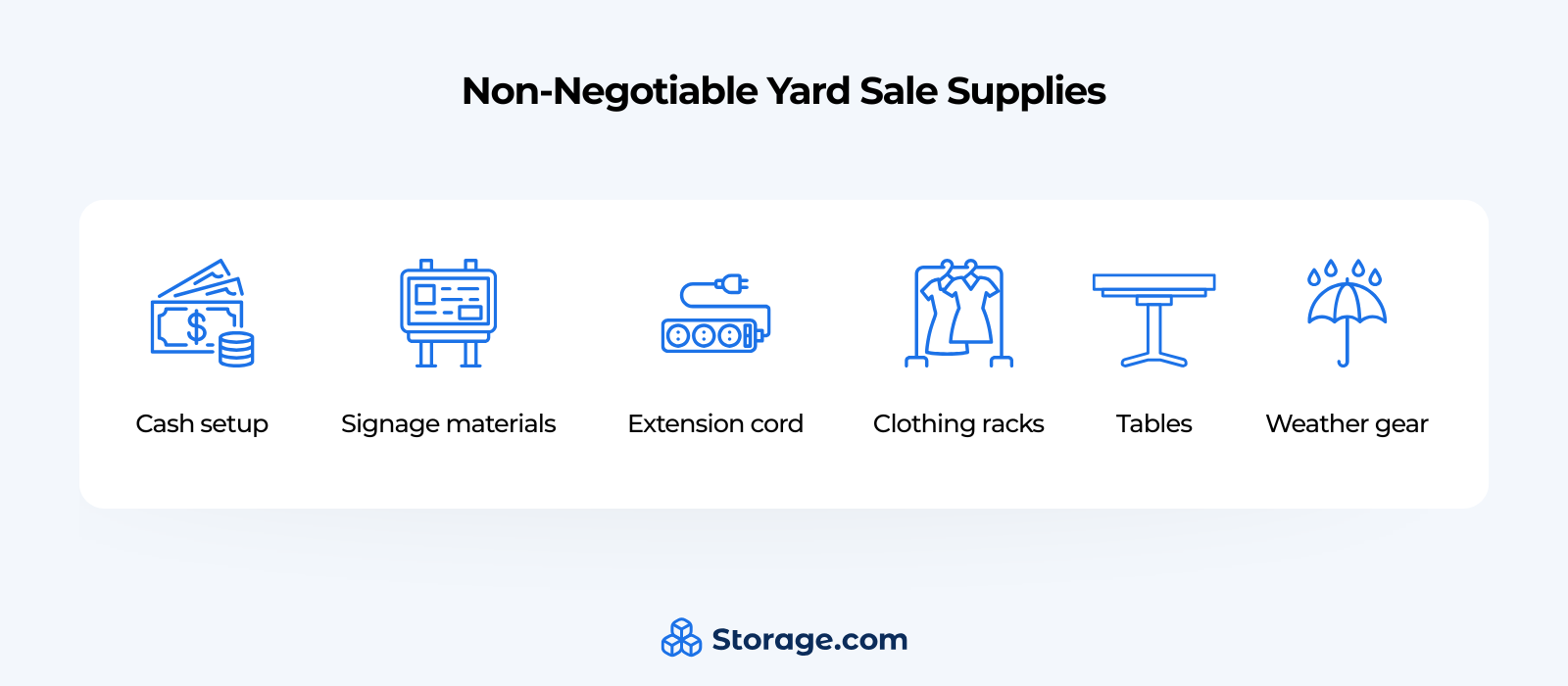
Again, the non-negotiable garage sale supplies you’ll want to have on deck are folding tables, price stickers, a cashbox with starting change, thick markers, poster board for signs, and shopping bags for your buyers. But for a more complete setup that provides a smooth, streamlined yard sale operation, there are some other key, often-forgotten items you’ll want to include as well.
Here’s everything you’ll want to have on hand on sale day:
| Display & Setup | Money & Payments | Operations & Comfort |
|---|---|---|
| Folding tables (6–8 ft) | Cashbox or fanny pack | Trash bags & bins |
| Clothing racks + hangers | Cash: $50–$100 in small bills & coins | Tarps or canopy (weather backup) |
| Price stickers/tags | Calculator or phone payment app (Venmo, PayPal) | Extension cord (demo electronics) |
| Thick, waterproof markers (for labels) | Bags for customers (plastic or reusable) | Hand sanitizer & sunscreen |
| Poster board (for signs) | Bungee cords/zip ties | Chairs for helpers |
| Tape & scissors | Sticky notes for item descriptions | Water & snacks for yourself |
| Ziploc bags (small items) | Mirror (for clothing sales) | First aid kit |
A Quick Breakdown of Your Non-Negotiable Yard Sale Supplies
Cash setup
- Arrive with $50–$100 in starting change: roughly $20 in ones, $20 in fives, and $5–$10 in quarters. Early shoppers frequently hand you a $20 bill for a $3 item, and running out of change early on can cost you sales.
- For items priced above $20, offer digital payment options like Venmo, PayPal, or Cash App. While some people show up to yard sales with cash in hand, plenty of shoppers don’t often carry cash. Plus, you want to be able to sell to passersby who pull over to shop spontaneously.
Signage materials
- You’ll need poster board, directional arrows, and thick weatherproof markers, since standard markers fade and bleed when dew hits them.
- A good garage sale sign has large text that drivers can read from their moving car at 25 mph. Specify the yard sale date and hours, and use clear directional arrows to guide them to your property.
- Dollar store balloon and arrow signs are surprisingly effective at catching eye-level attention from drivers.
Extension cord
- Plugging in electronics and letting buyers test them on the spot builds trust and eliminates the biggest obstacle to selling secondhand tech.
- A 25-foot cord handles most setups, especially if you’ve got outdoor outlets. Throw a power strip on the end of it for an added bonus, so multiple buyers can test stuff at once.
Clothing racks
- Items on hangers sell faster than clothes folded on tables. If you have more than 15 clothing items, a rack is worth borrowing or renting.
Tables
- Most people can borrow two or three 6-foot folding tables from neighbors or family, which keeps costs at zero.
- If you need more than your community can provide, party rental companies typically charge $8–$15 per table.
Weather Gear
- Check the forecast 48 hours before your sale. If you’re wondering how to do a yard sale in the rain, keep a tarp and a backup pop-up canopy on-site to protect your inventory and guests if rain is a looming threat.
- Don’t wait until the morning of the sale to check the weather, or you may miss your opportunity to stock up on gear.
Garage Sale Advice Tips: Pricing Strategy, Display Setup, and Advertising with Photos
The key to profiting from a yard sale is to find the sweet spot for pricing items, optimizing your item display strategy, and advertising ahead of time with high-quality photos. People are looking for a deal, but they’re also looking for items they need. Here’s how your garage sale can check off all those boxes.
How to Price Garage Sale Items
The golden rule of garage sale pricing is to mark your items down so they’re a deal. Shoppers expect to pay 10–25% of retail. The single most common reason items don’t sell at a yard sale is–you guessed it–overpricing.
Garage sale shoppers are hunting for exceptional deals. And if your prices feel close to what they’d pay at a thrift store or on Facebook Marketplace, they’ll often pass.
Here’s a category-by-category pricing guide:
| Item Category | Typical Retail | Garage Sale Price | Pricing Notes |
|---|---|---|---|
| Clothing | $30–$80 | $3–$8 | 25¢–50¢ increments; higher for brand names |
| Books | $10–$25 | $0.25–$2 | Hardcovers up to $3; bundle deals work well |
| Small appliances | $20–$60 | $5–$15 | Test before pricing; include all cords |
| Furniture | $50–$750 | $15–$75 | Price at 20–30% of retail; note any condition issues |
| Toys & games | $10–$90 | $1–$9 | Complete sets are worth more; disclose missing pieces |
| Electronics | $50–$500 | $10–$50 | Test and demonstrate; always disclose defects |
| Décor / Art | $15–$500 | $2–$50 | Sentimental value doesn’t transfer — drop the price to sell |
| Tools | $20–$100 | $5–$25 | Name-brand tools can fetch 30–40% of retail |
A few key pricing techniques to apply across the board:
- Price in 25-cent increments, so making change is fast and simple.
- Leave 10–20% negotiation room in your price tag price.
- Garage sale culture expects some back-and-forth
- Buyers who feel like they got a deal are more likely to buy multiple items.
- In the last 60–90 minutes of your garage sale, get aggressive about reducing prices, announcing it as you.
- Remember, the goal of a yard sale isn’t to reach a maximum profit margin–it’s to have nothing left over.
Yard Sale Organization Tips: How to Set Up Your Display
Items on display in a well-organized garage sale move faster than the same items in a pile. We suggest the zone-based approach, as we’ve seen it work time and time again.
Arrange tables in rows or aisles so buyers can flow through without crowding each other. Group items by category: clothing in one zone, books in another.
Have distinct and well-organized zones for electronics, kitchen items, kids’ toys, tools, and décor, each in its own zone.
A clear organization sends the message that you care for these items and keep them in good condition.
Put your most visually interesting or highest-value items near the entrance of your setup, or where they’re visible from the street. A vintage lamp or furniture piece and a neatly displayed electronics shelf near a power strip with some plugged-in and functional items on display will stop drive-by traffic. A pile of folded clothes probably won’t have the same impact.
Again, hang clothing on hangers and clothing racks whenever you can. Items on hangers sell faster, since buyers can comb through them all in less time than it takes to sort through piles of clothes. If they pick the same shirt up from the clothing pile twice, they’re likely to move on.
Separate any items that are not for sale, like patio furniture, outdoor decorations. We suggest putting them in the garage or in storage. But at the very least, move them far away from your yard sale display.
How to Take Garage Sale Photos That Drive Traffic
When it comes to how to do a yard sale, posting online listings of key items with high-quality photos is a time-consuming step in garage sale planning that’s easy to skip. But it’s also one of the easiest ways to increase foot traffic. Here’s how to take and post garage sale pictures of garage sale items that drive traffic to your sale, broken down into 4 easy steps:
Step 1: Photograph your 5–10 most valuable or interesting items individually. Knock this step out before the sale so you have time to post with good images. Photograph each item against a clean, uncluttered background, like a plain wall, a clean floor, or a white sheet. Include multiple angles for things like tools, electronics, jewelry, furniture, and anything else with fine details that matter.
Step 2: Use natural daylight. The ideal lighting for garage sale photos is natural light, shining onto the photo subject from a nearby window. You can also photograph them outside on an overcast day. Avoid harsh direct flash, which flattens details, making your belongings look more worn than they are. If you’re shooting outdoors, a shaded spot beats full sun for most items.
Step 3: Post each individual item separately on online listing platforms. Facebook Marketplace, Nextdoor, local Facebook Groups, and Craigslist are the go-to sources for browsing for used items.
Post 5–7 days before the sale date, and mention your yard sale in your item description. If anyone contacts you, the goal is to get them to the yard sale, where they can buy more of your stuff.
You’re posting an individual post for each of your high-demand items, because a listing titled “Dewalt drill set, barely used, $35” will attract local online shoppers searching for a specific item.
Update your listing the day before to say “Garage Sale Tomorrow!” to remind all the watchers to come.
Step 4: Include an honest overall photo of your setup: On the morning of the garage sale, as soon as you’ve set up, update all your individual online listings with a photo of your setup. Change the listing to read “Yard Sale Starts Now!” It’ll serve as a final reminder to anyone who’s been watching. It also sends the message that there’s a wide variety of items to browse and gives the post a sense of scale.
Day-Of Garage Sale Advice Tips: Negotiation & What to Do with Unsold Items
Set up at least 1–2 hours before your posted start time. No matter what start time your listing and signage gives, early bird shoppers and curious passersby almost always stop by as soon as you’re laying out items. We suggest posting your start time at the yard sale entrance to avoid having the same conversation multiple times.
Once the yard sale is rolling, here are some practical garage sale advice tips to follow:
Keep your cashbox on your person, not on a table. A fanny pack keeps the money secure without bogging down your hands.
Lock your house doors before the first shopper arrives, and keep them locked all day.
Follow a strict no-public-restrooms policy. There’s no reason to invite or allow yard sale shoppers into your home. If they need a restroom, point them to the closest grocery store.
Brief any helpers on your pricing and negotiation rules before you open. A helper who doesn’t know your bottom lines will either give things away or frustrate you and your buyers with “I’ll have to ask,” rendering their help useless.
Post directional signs at key intersections the day before and check that they’re still there first thing in the morning.
Keep not-for-sale items out of sight or in a designated “not for sale” zone that’s roped off and clearly marked. Out of sight in a garage, shed, storage container, or storage unit is ideal, as persistent hagglers might try to buy not-for-sale items they can see, regardless of the signs.
How to Handle Yard Sale Negotiation
Negotiation is part of garage sale culture. Not only should you expect it, but resisting it could also cost you sales. You can prep for hagglers and negotiating by setting your opening price with just enough negotiation room built in to allow you to stay flexible.
If someone offers $5 for a $7 item, keep your core purpose in mind: to get rid of everything. and bring nothing back inside the house. With that primary goal in mind, here are a few more negotiation strategies to try:
- Offer bundle deals and mark them with signs. “$1 Per book–3 Books for $2” can help you move more books faster, for example.
- Proactively combine relevant items into deals when you see someone considering buying multiple things. “If you buy those headphones and that computer mouse, I’ll throw in the mouse pad for free.”
- Accept digital payment options like Venmo, PayPal, Cash App, especially for anything over $20. There are yard sale shoppers who don’t carry enough cash for bigger items and will walk away if you’re cash-only.
- In the final 60–90 minutes, announce a blanket reduction, like “Everything half price” or “Fill a bag for $5.” Don’t just write it on a sign. Say it out loud so everyone browsing can hear.
Remember, the goal isn’t to squeeze maximum profits out of each sale. It’s to get rid of everything so there’s nothing to carry back inside at the end of the day.
A Note on Garage Sale Safety
Hosting a garage sale means allowing strangers onto your property. It’s inevitable, and part of accepting that is planning accordingly.
Keep your cash in a funny pack on your person, not in a visible box or cash drawer on a table.
Lock every one of your house doors before the sale starts. Don’t let anyone inside under any circumstances. Keep your pets inside, contained behind a gate or in a backroom or bedroom, so they don’t dart out if you need to go inside and back out in a hurry.
Post a “No Public Restrooms” sign and refer to it. If a buyer asks to use the restroom, politely redirect them to the nearest public option. If someone’s behavior feels off, trust your instincts and ask them to leave.
We suggest having at least one other person at the yard sale with you so you’re not setting boundaries and dealing with transactions all on your own.
What to Do with Unsold Garage Sale Items
You’ll want to include a plan for any unsold items during the garage sale planning stage rather than waiting until after the garage sale. Otherwise, you’re tempted to put everything back in the house, which defeats the whole point of the yard sale.
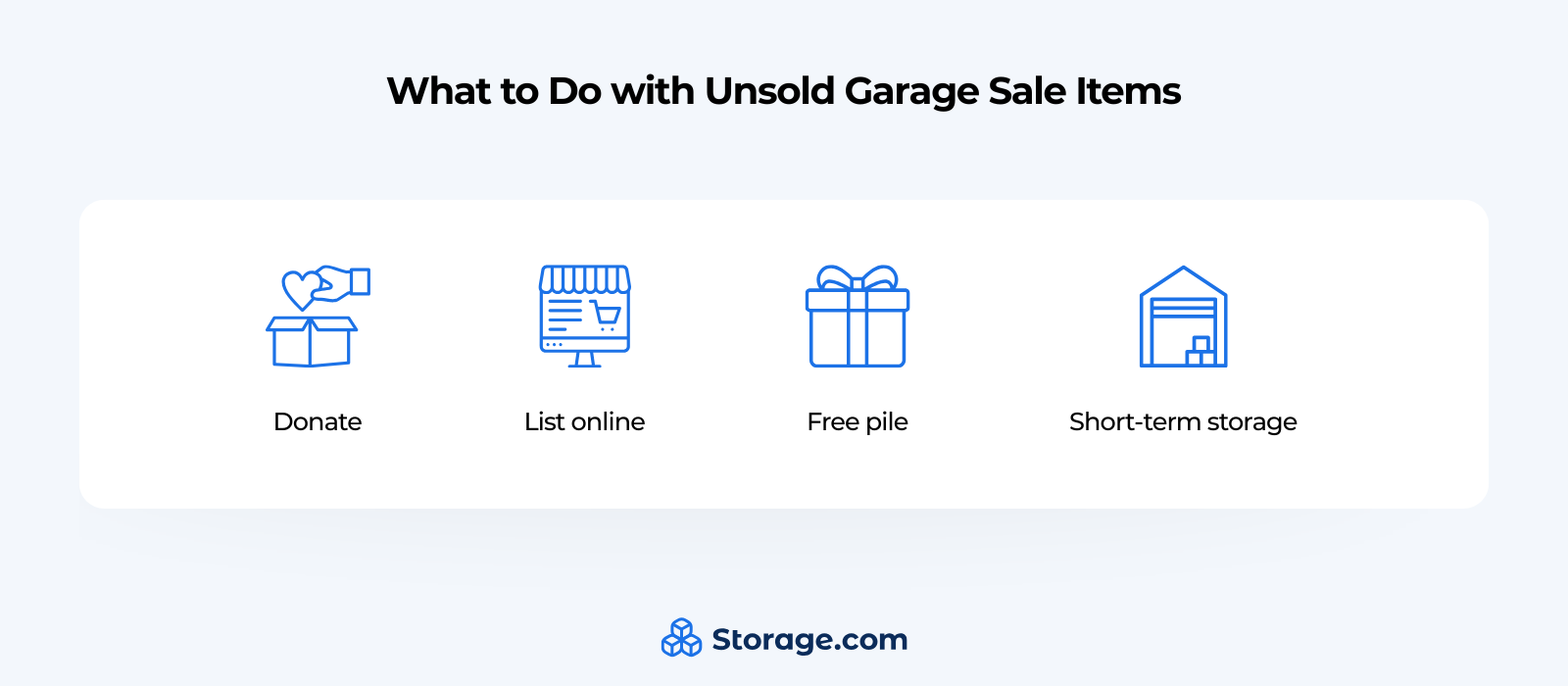
Here are the four primary things you can do with your unsold garage sale items:
- Donate. Schedule a charity pickup in advance so you have a confirmed date already on the calendar when the sale ends. Habitat for Humanity ReStore, Salvation Army, and Goodwill all offer free pickup services for bulk donations. Scheduling it before the sale removes the psychological rationalization of dealing with it later.
- List online. Remember those online listings you made to promote the sale? Delete the ones for the items that sold, and leave the rest up. Make new listings for anything priced above $20 that didn’t sell. And remember, post them as separate, individual listings, in fact. You can make more money selling stuff like quality tools, furniture, collectibles, and name-brand clothing online than at a yard sale.
- Free pile. In the final 30 minutes, set out a box or table of free items and post it on Nextdoor with a picture and a caption that says, “free stuff, first-come, first-served.”
- Short-term storage. Sometimes items like quality furniture, collectibles, power tools, musical instruments have a genuine resale value so good that yard sale shoppers can’t afford it, even at 90% markdown. Rather than bringing these things back inside the house, put them in a short-term storage unit. This keeps your house clear while also buying you time to photograph and list them properly without bringing everything back into your home.
Options like month-to-month storage let you take advantage of the extra storage unit space without locking you into a long commitment.
FAQs
How To Do a Yard Sale: Storage.com Can Help
A successful garage sale comes down to making a plan and following your system. Plan 3–4 weeks out, check your local permit requirements before setting a date, and gather the right supplies far in advance.
When the day gets closer, the price to sell out is not to make huge profits. Advertise with photos, set your yard sale up into organized zones based on item types, and have your unsold items plan in place before the final hour arrives.
Our last pro tip on how to do a yard sale involves taking advantage of storage unit space. For example, you can use a storage unit as a staging area in the weeks leading up to the sale. Using a storage unit as a mini boutique gives you a place to sort and price all your for-sale items without turning your living room into a commercial inventory warehouse.
And after the garage sale is done, you can use your storage unit rental to hold onto high-value items that didn’t sell. Keep them in your storage unit short-term while you take pictures of them, list them online, and wait for them to sell.
But not every storage unit is created equal. For example, you’ll want a climate control unit equipped with humidity and temperature management technology to keep sensitive items like furniture and electronics safe until sale day.
Drive-up storage lets you pull your personal vehicle or moving truck rental right up to the unit’s door for easy loading and unloading.
Storage units also come in different sizes. Book a unit that’s too small, and you won’t be able to fit all your garage sale items in there with room to price and take photos. But if you book a unit that’s too big, you’re paying for space you don’t need.
You also want a storage unit that’s close to your house, so you’re not driving across the city before and after the yard sale.
But how do you find a storage unit that has everything you need and is also located nearby?
That’s where we come in.
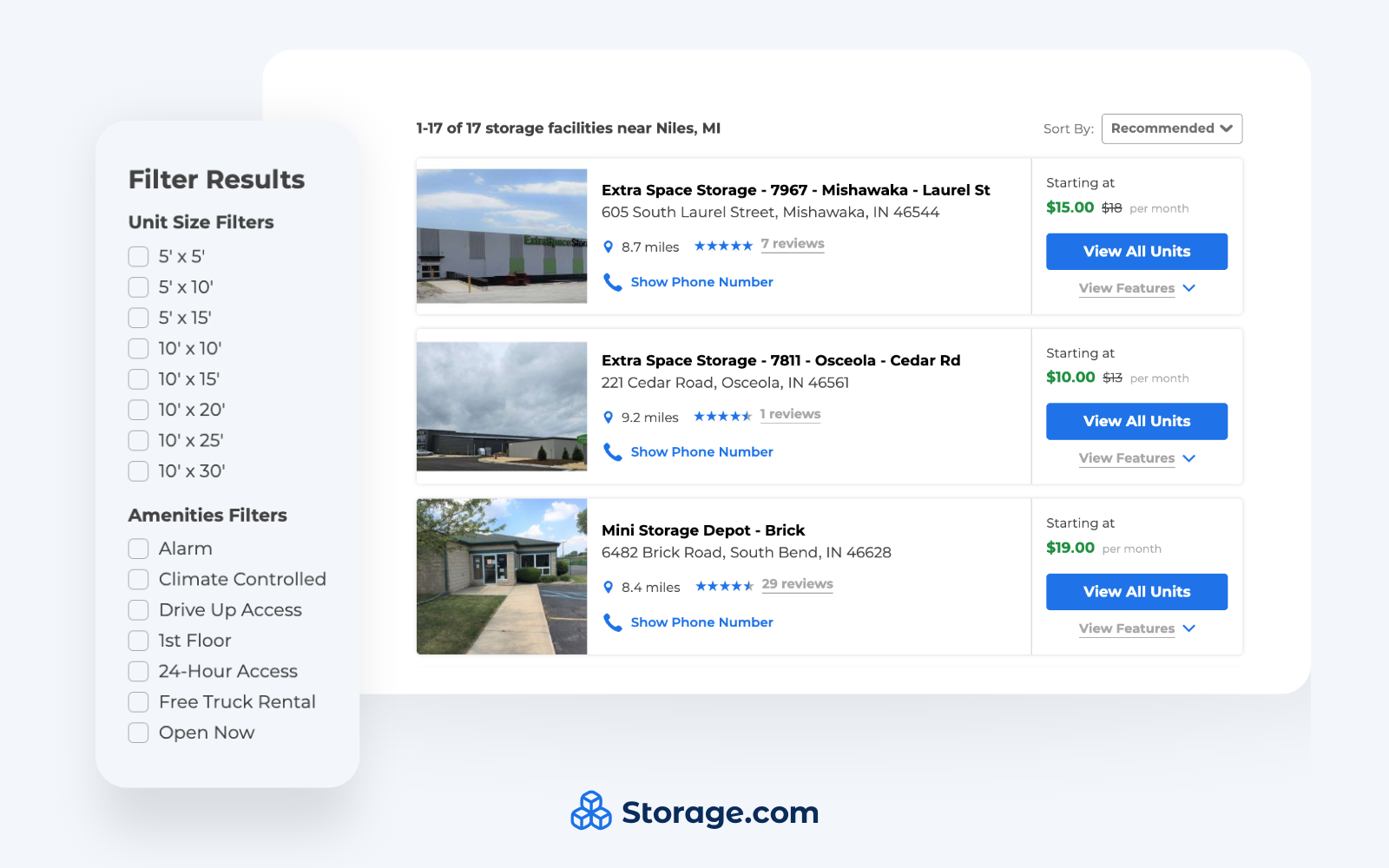
Just punch your zip code into our handy storage unit locator tool, select all the features, size dimensions, and amenities you want. We’ll narrow the search results to facilities that have your ideal unit available.
And the past part? Storage.com is free to use–no credit card required! So put your time, energy, and funds to use planning for your garage sale while we find the ideal storage unit for you.