

Article takeaways
- Always wash or dry-clean clothes before storing — stains and odors set permanently over time and can ruin fabrics in long-term storage.
- Use breathable storage bags for general clothing and plastic bins with secure lids for moisture and pest protection. Avoid cardboard boxes entirely.
- Climate-controlled storage units are essential for preventing mold and mildew, especially in humid climates — even the best containers can’t compensate for poor storage conditions.
- Label everything and keep a clothing inventory list to avoid buying duplicates and make seasonal rotation seamless.
- Swap mothballs for cedar chips or dried lavender sachets, and add silica gel packets to keep stored clothes fresh and moisture-free.
Every time the seasons change, closets seem to burst at the seams, with winter coats hogging space while summer tees get squished. And it’s even worse if you’re living in a spot where the weather goes through four seasons in a year.
As tempting as that extra space in your attic, basement or garage looks, an even better fix would be to chuck seasonal clothing in clothing storage containers or a climate-controlled self-storage unit for proper clothing preservation and forget about it for a few months. That’s because all those areas around your home can be prone to extremes in temperatures and humidity, which can easily turn textiles into a mold fest.
Whichever way you go, there’s a game plan for everything. In this case, it consists of proper cleaning, clever packing with the right storage containers and storage totes, and smart organizing with a detailed inventory list. Ready? Let’s see how to safely stash out of sight the stuff you won’t need until the season changes.
Steps To Take Before Storing Clothing
Before anything else, make sure your clothes are clean. Why? Because pre-washing or dry-cleaning is your best defense against stains and odors turning into permanent guests — always check care labels before washing to avoid damaging delicate fabrics like merino wool. Those little spills or faint smells might not be noticeable now, but over a few months? They can turn into a real mess. So, toss that seasonal clothing in the wash or drop it off at the dry cleaner, ensure everything is dry before long-term storage, and use moisture absorbers like silica gel packets or a dehumidifier pack.
Next up, packing — should you fold or should you hang them? Not all clothes are created equal, so here’s how you can quickly decide on the right packing method:
- Fold sweaters, T-shirts and jeans. They can handle the bend, plus folding saves space. Instead of flat-folding, try the army roll for a wrinkle-free experience.
- Keep suits, dresses (especially wedding dresses) and blouses on wooden hangers and in seasonal wardrobe boxes to avoid wrinkles and maintain their shape. Use a protective garment bag for extra protection, especially for merino wool or silk pieces.
Seasonal Clothing Containers
Choosing the right clothing storage containers can make a big difference — and cardboard boxes are completely off the table. Your main choices here are breathable storage totes, plastic storage bins, seasonal wardrobe boxes, and vacuum-sealed bags.
| Container Type | Best For | What to Look For |
|---|---|---|
| Breathable storage bags | General clothing storage | Collapsible, with a transparent window for visibility. The breathable fabric, often with added mesh for ventilation, helps prevent moisture buildup. |
| Stackable plastic bins | Maximizing vertical storage space | Secure latching lids on plastic storage bins and plastic containers protect against moisture and pest control. |
| Underbed bags | Utilizing under-bed space | Slides under most standard beds; clear tops for easy visibility; less protective but space efficient. |
| Underbed bins with wheels | Easy access under beds | Hinged lids and wheels for easy movement; more durable and protective. |
| Wardrobe boxes | Hanging garments | They mimic a closet and protect your clothes from getting squished. Avoid wire hangers; wooden or padded ones offer better support. |
| Vacuum bags | Bulky items, like winter coats | Vacuum-sealed bags and vacuum packing are a smart choice for tight spaces — space-saving, airtight and waterproof. Also works for acid-free archival boxes contents and guest bedding. |
| Drawer organizers | Underwear and accessories | Various compartment sizes, ideal for organizing small items within drawers or on shelves. |
Organization Is Key When Storing Clothing
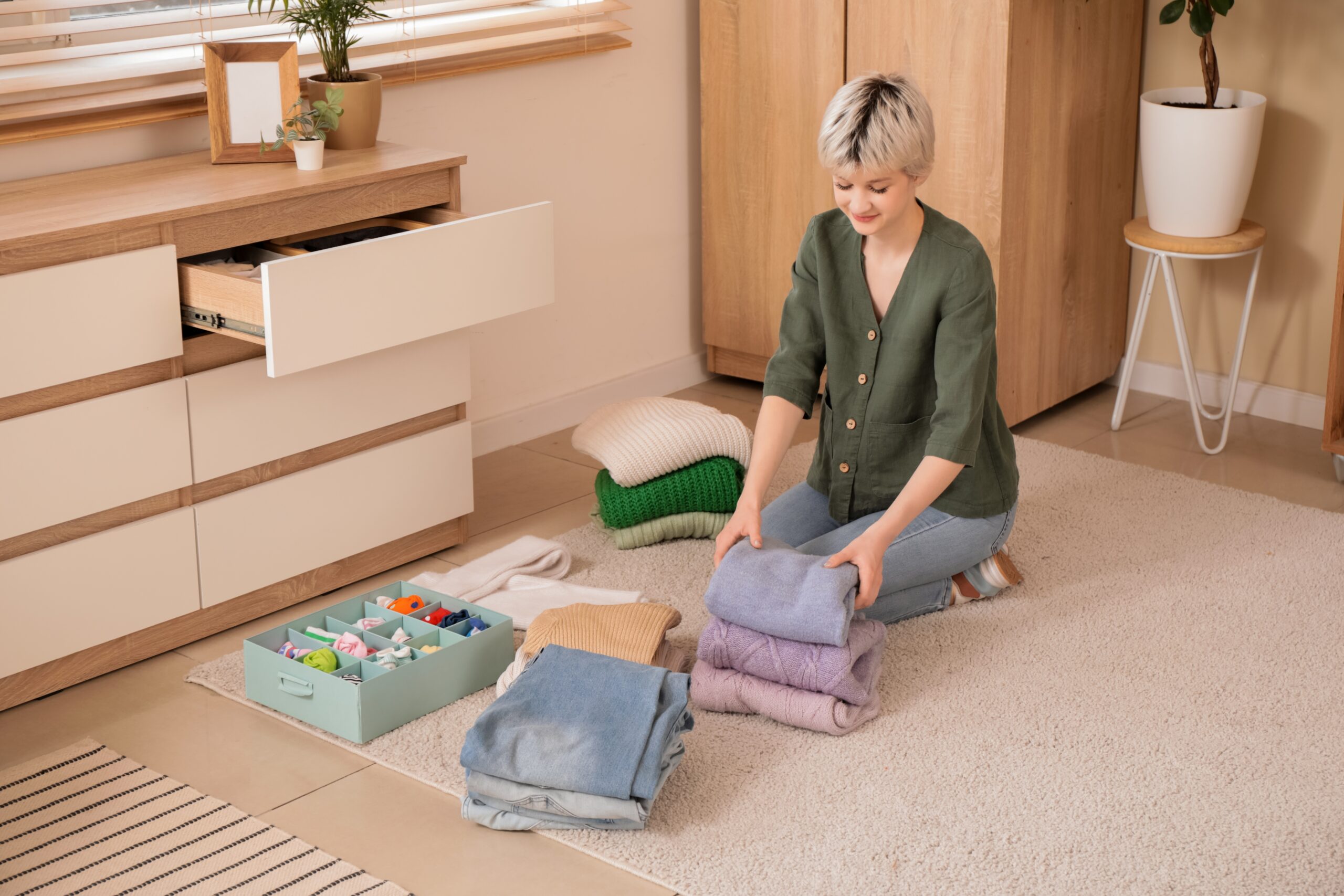
Before you even start packing away seasonal clothing into clothing storage containers and storage totes, it’s smart to sort things out in a quick decluttering session. Toss out what you haven’t worn in a year by donating the good stuff and turning those pieces beyond repair into rags.
Once you’ve narrowed down your keepers, group them by season and activity and keep them findable by clearly labeling your storage containers and maintaining a detailed inventory list and clothing inventory of what’s stored where. For instance, you could have separate stacks for winter sweaters, workwear, outdoor gear and those chill-at-home outfits.
Not sure how to store clothes in a storage unit as efficiently as possible? Just stack boxes and bins strategically. Seasonal wear that you’ll dip into sooner rather than later, like those perfect spring/fall jackets, should be on top or at the front of your storage area, where you can grab them easily.
When it’s time to switch from summer to winter wardrobes, do it all at once. Pack up this season’s gear as you unpack the next to keep your storage rotation smooth and sensible.
A Clothing Storage Unit Sure Comes in Handy
Under-the-bed storage is great for a lot of things that you need to access frequently. Seasonal clothing doesn’t really qualify as it would just take away valuable space for months on end. So, unless your attic, basement or garage are properly insulated and with enough room to spare, storing clothing between seasons calls for renting a storage unit.
How to choose a clothing storage unit
It all starts by picking a convenient location, with top-notch security features, climate control and just the right unit size for your needs.
- Climate-controlled units are a must to prevent mold and mildew, especially in humid areas — even the best vacuum-sealed bags and plastic storage bins can’t fully compensate for poor storage space conditions. These units protect fabrics and keep your clothes fresh by maintaining constant temperature and humidity levels.
- There’s no point paying for more than you use, but cramming winter clothes for a family of four into a 5×5 unit isn’t a good idea either. This clothing storage unit is perfect for smaller wardrobes — for larger collections or bulkier items, consider renting a 5×10 one. That way you will actually have room to move around and find the items you want when you need them.
- Security-wise, look for a storage facility with digital surveillance cameras, gated access, and proper pest control measures to protect your clothing storage containers and storage totes.
- Choose a clothing storage unit that’s convenient for you to access, but balance that with the price at all times. After all, you will want to switch out clothes with the seasons — roughly every 3–6 months, depending on your climate — not daily.
How To Store Clothes Longer
Before packing clothes away for the season, fix any missing buttons, broken zippers or small tears. With everything in order, it’s now time to keep things fresh and ready to wear whenever you need to.
- Swap out those stinky mothballs for natural alternatives and better pest control. Our suggestion: Cedar chips, cedar blocks, or dried lavender sachets. For gowns and coats stored on wooden hangers, you can find sets of red cedar rings and cedar blocks that you can reuse year after year by reviving them with some light sanding and a spritz of cedar oil.
- Storing clothing for more than a season in long-term storage? Prevent musty smells or moisture buildup by adding silica gel packets or a dehumidifier pack and airing out your clothing storage containers about once a year.
- Give your seasonal clothing — including delicate items wrapped in acid-free tissue paper inside acid-free archival boxes — a quick refresh with a dryer sheet or fabric spray when you take it out of long-term storage. While typically scented, fabric refresher sprays can also come scent-free and you can make your spray at home with some fabric softener, water and either baking soda or rubbing alcohol.
Storing Clothing Made Easy
Ready to store your seasonal clothing the right way? Here’s your quick checklist:
| Wash, dry, and mend everything — and always check care labels first | |
| Pack clothing into clothing storage containers, storage totes, or vacuum-sealed bags | |
| Wrap delicate pieces in acid-free tissue paper before packing | |
| Add dried lavender sachets and silica gel packets to keep things fresh and moisture-free | |
| Hang structured pieces on wooden hangers inside a protective garment bag | |
| Label everything clearly and log it in a clothing inventory and inventory list | |
| Stash it safely in a climate-controlled storage space that’s just the right size |
Now you can keep your clothes in check no matter the season!