Article takeaways
- De-winterizing a house begins outside. Start your spring home maintenance by inspecting your roof, gutters, siding and foundation for winter damage and anything in need of repair.
- Prioritize plumbing and HVAC de-winterization. Reconnect outdoor hose bibs, flush water lines, replace dirty air filters and test your A/C before warm weather hits.
- Getting the jump on seasonal home maintenance saves money. Catching damage or making repairs early is much cheaper than having to address them during the pricier, high-volume peak season.
- Thoroughness is key. Missing even one area during spring home maintenance prep can cost you. A single clogged downspout or overlooked broken pipe could result in thousands of dollars in water damage.
- Spring home maintenance is ideal for organization. As you swap winter gear for seasonal items, take inventory of what you need and use the time to declutter.
Picture it: Spring.
You step outside on the first warm day of the year, ready to enjoy the beautiful weather, only to find a cracked outdoor pipe dripping water down your foundation, gutters packed with last fall’s leaves, and a garage so stuffed with holiday bins and winter gear that you can’t find the lawnmower. What a way to ruin your plans for the day.
This scenario plays out every spring in homes across the country because spring home maintenance is easy to put off till the damage is already done. The good news is that a few focused hours now can prevent weeks of headaches and heaps of repair bills later.
De-winterizing a house means reversing the protective steps you took in the fall to prepare it for harsh cold temperatures. You’ll drain systems that were winterized, inspect areas that were subjected to cycles of freezing and thawing, and ensure your home’s major systems are in good working order in time for the spring and summer months.
This guide to spring home maintenance will walk you through every critical step, with practical advice to help you save time, money and stress. Let’s get started.
The Smart Start: Why the Exterior of Your Home Should be First on Your Seasonal Home Maintenance List
The exterior of your home should be your first priority when it’s time for seasonal home maintenance. Before you touch a single indoor system, walk the perimeter of your house and conduct a full inspection of your roof, gutters, downspouts, foundation, siding and window and door seals. These are all the areas where winter damage can hide and worsen if not caught and corrected in time.
Start by looking for water damage, which is the most common and costly winter damage most homes sustain. Check for clogged gutters, which can drive water from melted snow and spring rains directly toward your foundation. Cracked or heaved concrete at the base of your house could allow water intrusion, and missing shingles on your roof may expose your attic and ceilings to damage from storms.
Check your roof for missing, curled or cracked shingles, and ensure the flashing around chimneys and vents is sound, to prevent leaks. Move to your gutters and downspouts next, and remove any packed debris to ensure water flows down and away from your home. Check your window wells and clear them of any debris that may have accumulated. At ground level, look for shifted concrete, widening cracks or soil pulling away from the base of your foundation, all of which indicate frost heave from excessive freezing and thawing.
We’ve put together this quick exterior checklist you can follow as you work:
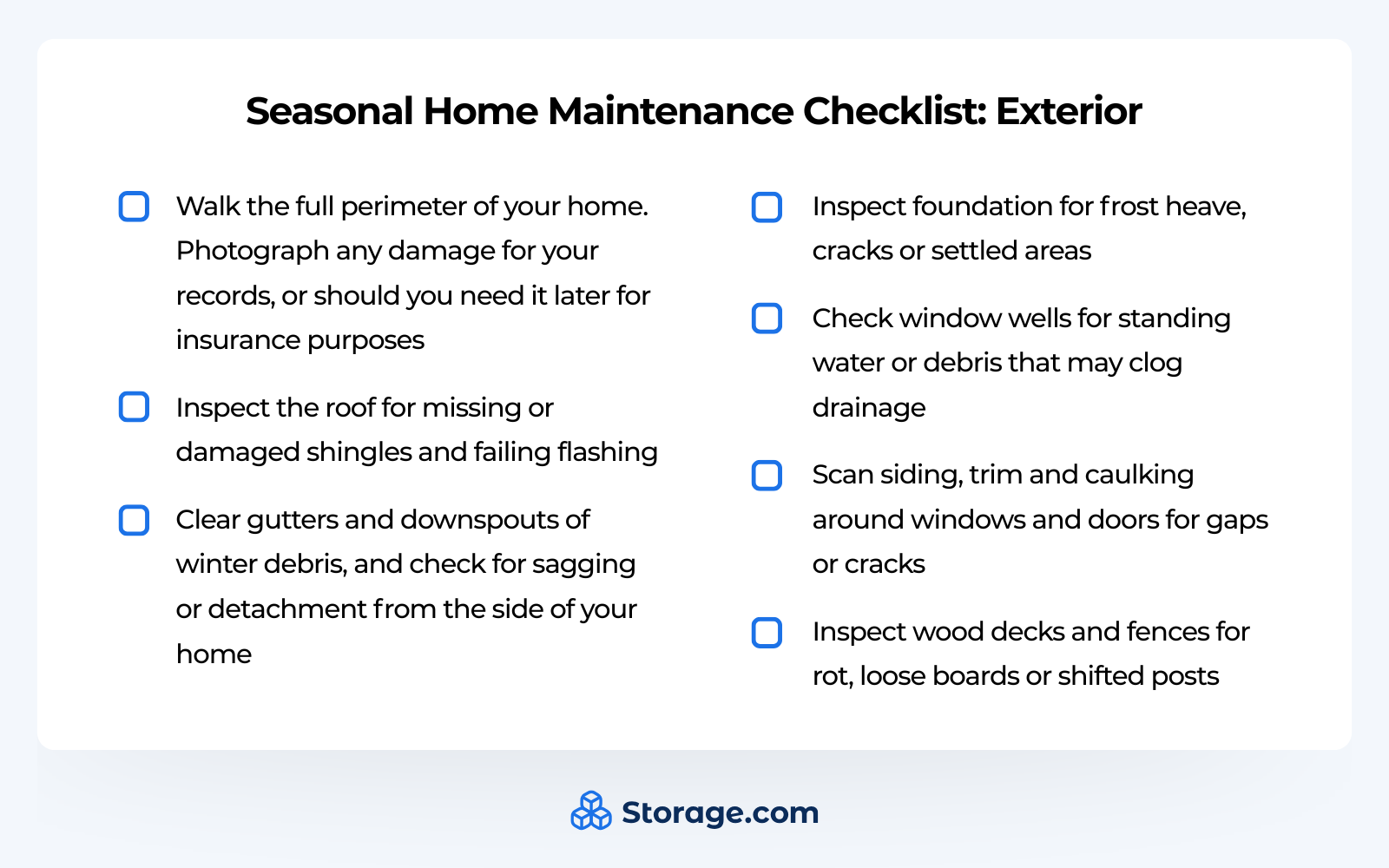
- Walk the full perimeter of your home. Photograph any damage for your records, or should you need it later for insurance purposes.
- Inspect the roof for missing or damaged shingles and failing flashing.
- Clear gutters and downspouts of winter debris, and check for sagging or detachment from the side of your home.
- Inspect foundation for frost heave, cracks or settled areas.
- Check window wells for standing water or debris that may clog drainage.
- Scan siding, trim and caulking around windows and doors for gaps or cracks.
- Inspect wood decks and fences for rot, loose boards or shifted posts.
Your Complete Seasonal Home Maintenance Systems Startup Guide: Don’t Let Winter be the Splinter that Decenters Your Home as Spring Enters
Ensuring plumbing and HVAC systems are functioning properly is an essential part of de-winterizing a house.
Plumbing
If you wrapped outdoor hose bibs last fall, now is the time to unwrap them and slowly reopen the valves that feed them. Do this gradually, and check for drips at the connection point before fully reopening. Even if you didn’t fully winterize, it’s a good idea to walk the full perimeter of your home, giving special attention to any water-bearing areas that may be susceptible to damage.
Inside your home, run your hand under exposed pipes in sinks and in the basement to check for signs of leaks or hairline cracks that could cause slow drips leading to water damage over time. Flush unused faucets and showers for a couple minutes to clear any sediment buildup, and test your outdoor irrigation zones for damaged sprinkler heads or underground line stress. You want to catch these issues before the growing season hits.
HVAC systems
Start by replacing any neglected air filters; if your air filter hasn’t been replaced since last fall, it’s surely overdue. Clear away any airflow-restricting debris from your outdoor A/C condenser unit to preserve your unit’s efficiency. Test your thermostat in cooling mode at least a few weeks before you will actually need A/C, to allow time to schedule an HVAC technician if something isn’t working properly. As always, it’s best to do this sooner rather than later to avoid higher costs and longer wait times when warm weather officially starts, and service demands are high.
Don’t overlook smoke and carbon monoxide detectors. Test each unit to ensure it is working properly, and replace any dead batteries. Check your water heater’s temperature setting and look for any corrosion around the pressure relief valve. Give your sump pump a manual run by pouring water into the pit, as spring rains could cause a failed sump pump to flood a basement in a matter of hours.
This home systems checklist will help keep you on track:
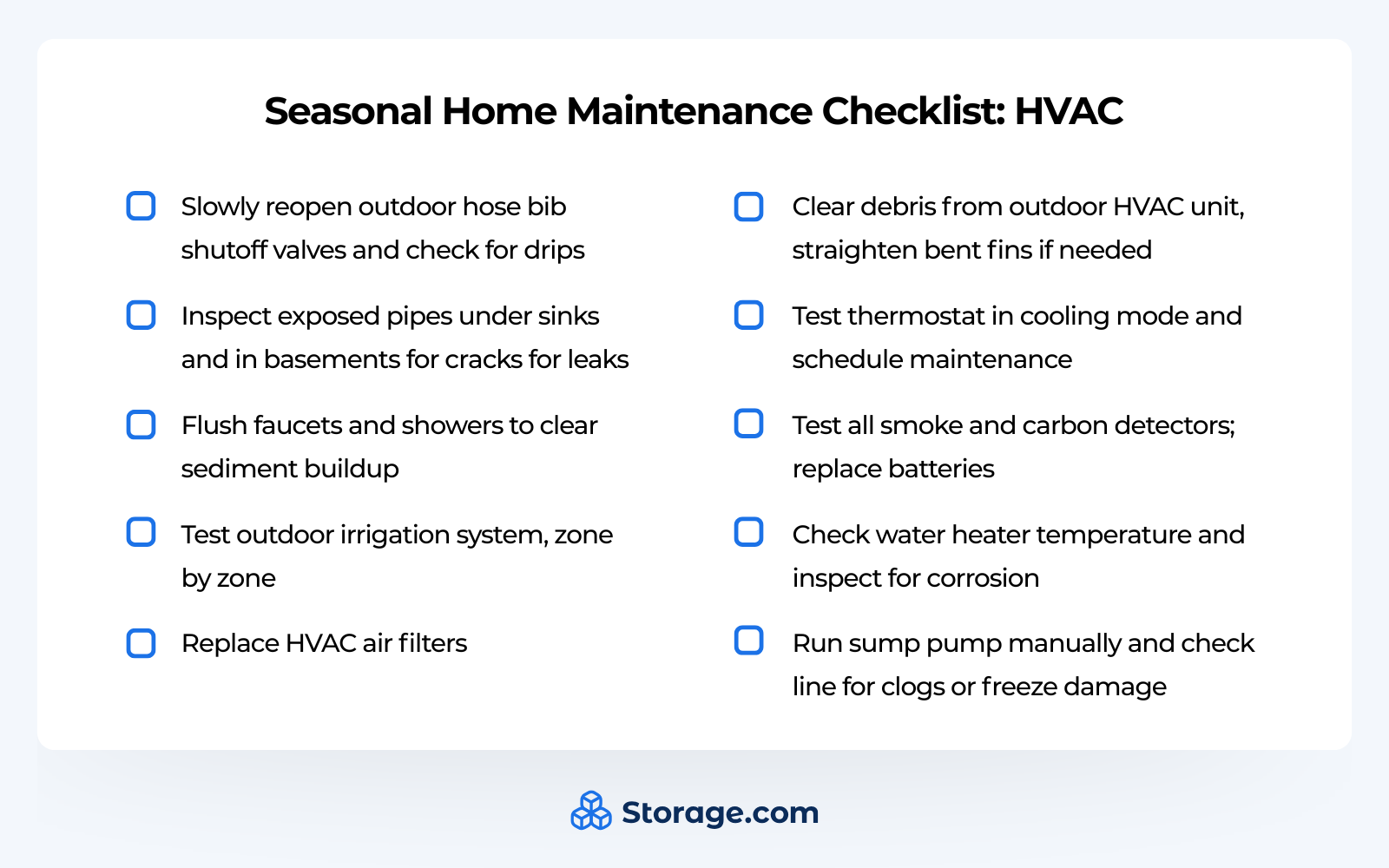
- Slowly reopen outdoor hose bib shutoff valves and check for drips
- Inspect exposed pipes under sinks and in basements for cracks for leaks
- Flush faucets and showers to clear sediment buildup
- Test outdoor irrigation system, zone by zone
- Replace HVAC air filters
- Clear debris from outdoor HVAC unit, straighten bent fins if needed
- Test thermostat in cooling mode and schedule maintenance as early as possible, if needed
- Test all smoke and carbon detectors; replace batteries as needed
- Check water heater temperature (ideal: 120 degrees F) and inspect for corrosion
- Run sump pump manually and check line for clogs or freeze damage
Spiffing Up for Spring: Tips to Help You Get Organized During Seasonal Home Maintenance
Seasonal home maintenance is a great time to tackle decluttering and resolve pesky storage dramas. As you de-winterize a home, you may discover that when it’s time to pack things away or swap them out, you’re fighting for space in your garage or shed. This is especially likely if you made bulky new purchases during the winter season that now need a home in storage.
Winter gear, holiday items, gardening tools, patio pieces and cold-weather equipment all vie for space, and the smart move is to treat it strategically. Do a quick seasonal audit by separating items used year-round from those only touched during winter. You’ll quickly see what’s occupying space it shouldn’t.
When you’ve identified this seasonal overflow, consider if you still need everything you have. You can discard or donate items you no longer need, and explore home organizational options such as shelving, functional furniture, storage bins, wall hooks and peg boards, or off-site self-storage for items that are too big for your available space, or pieces that are infrequently used.
Clearing out clutter during spring as you prepare for spring is a great way to keep your home tidy and discover usable space. Less stuff unblocks paths and removes trip hazards to create a safe home environment, easier cleaning, and faster, more accurate seasonal home inspections.
Spring-Forward With These Simple Seasonal Home Maintenance Tips: De-Winterizing a House Ensures Long-Term Savings, Value and Enjoyment
Thorough spring home maintenance is a simple step-by-step process that is easiest with a little pre-planning and organization. Consider making a home inspection checklist of the steps you take during winterization, so that when it’s time to de-winterize a house, you can undo each step you took simply by working backward through your inventory.
Detailed inspections of critical systems and equipment both outside and inside your home will equip you to catch problems early and take proactive action now, before small issues become giant financial headaches later. Your foundation, roof, plumbing and HVAC systems are critical to keeping your home running smoothly, and inspecting them as part of a yearly seasonal home maintenance review should be at the top of your to-do list when the weather changes.
Don’t be the homeowner who’s shelling out big bucks to repair what could have been caught in 20 minutes with a little due diligence. Be the homeowner who’s enjoying a warm breeze, the beverage of their choice, and the surety of knowing their home is structurally and functionally sound all year long.
Start outside, work your way in, and should your winter gear need a space-saving home away from home, Storage.com makes it easy to find affordable and convenient self-storage near you.
FAQs
Typical steps include re-opening outdoor plumbing shutoff valves, flushing water lines that were drained before winter and swapping out winter gear for spring essentials. Preparing a home for spring should begin when overnight temperatures are consistently above freezing.
You could incur higher costs if you need to hire a professional service to reconnect and inspect your plumbing system, or inspect your HVAC for issues. These services typically run around $100-$300+ for basic maintenance work, and your cost will vary depending on your location, repairs required, and the time of year. If you require a professional maintenance service, it’s best to schedule and complete these services before the pricey peak season begins.
Call a pro when you need an A/C tune-up, if plumbing lines need to be checked or if a pipe has burst, or if you suspect damage to your roof. This common handyman tasks guide can walk you through the most popular home DIY tasks.
Expect season storage swaps, decluttering and cleanup to take longer, depending on the volume of items to sort. If you have a lot of tidying to do, plan a second weekend to take on that work.