
Article takeaways
- The right tool storage system saves time, reduces clutter, and protects your equipment from damage.
- Vertical space, wall systems, and custom-built solutions help maximize garages and workshops of any size.
- Temperature, humidity, and dust control play a major role in keeping tools in good working condition.
- Hand tools, power tools, and trade-specific gear all benefit from tailored storage solutions.
- Self-storage units, especially climate-controlled ones, are ideal when tools outgrow your home or need added protection.
It only takes one missing drill bit or a rusty wrench to throw off an entire project. Most people don’t realize how much time disappears into searching through drawers, shifting boxes around the garage, or guessing where a tool ended up last. A cluttered setup slows everything down and makes even simple tasks feel like a chore.
When your tools have a clear home, everything changes. Projects start faster. Cleanup feels easier. And the tools you rely on stay in better shape. The good news is that you don’t need a full workshop makeover to get there. A few simple systems, matched with the right storage style, can transform a garage, shed, spare room, or storage unit into a workspace that works for you.
This guide walks through practical, easy-to-follow ideas for storing power tools, hand tools, small parts, and larger equipment. You’ll also find helpful tips for preventing rust, choosing storage options that make sense for your space, and knowing when a climate-controlled storage unit is worth considering.
Every setup looks a little different, but the goal stays the same: create simple systems that save time, reduce wear on your equipment, and make every project easier from start to finish.
Assessing Your Tool Storage Needs
A great storage system starts with knowing what you actually own. Before you buy shelves or rearrange your garage, take a quick inventory. Most tool clutter comes from not having a full picture of what’s in your collection.
Gather your tools and sort them by category. Power tools in one area. Hand tools in another. Hardware, bits, fasteners, and accessories together. This step alone gives you a clearer idea of how much space you’ll need and helps you spot duplicates or tools that can be donated.
Think about how often you use each item. Tools you reach for weekly should be front and center. Seasonal items can be stored higher up or farther back. This helps you decide which tools deserve wall space, which fit best in drawers, and which might be better off in a storage unit.
Your environment matters, too. Battery-powered tools and anything with electronic components handle temperature swings poorly. Humidity, dust, and direct sunlight can also wear tools down faster than you expect.
A helpful way to get started:
- What do you grab for most often?
- What only comes out in certain seasons?
- Which tools are sensitive to moisture or heat?
- Are you working with limited floor space?
- Do you need to secure high-value tools?
Once you know your tools, assess your storage needs, and the space available to you, everything else becomes easier. It also helps to think about whether your collection is likely to grow. Leaving a little extra room now makes your system easier to maintain later on.
You’ll know which systems fit your workflow instead of working against it.
Tool Storage Fundamentals

A solid storage system starts with the basics. These principles guide how your workspace feels, how easy it is to maintain, and how smoothly your projects move from start to finish. Think of this section as the foundation that supports every shelf, hook, drawer, and rack you add later.
Start With Accessibility
The tools you reach for the most should always be the easiest to grab. Keeping everyday items front and center saves time and helps you stay in a steady workflow. A drill you use weekly shouldn’t live at the bottom of a bin. A tape measure shouldn’t be tucked deep inside a drawer. Prioritizing accessibility is one of the quickest ways to make your workspace feel more intuitive.
Pro Tip: Keep a small tray or magnetic dish near your workspace for screws and bits you use often. It cuts down on searching and keeps your workflow moving.
Build Logical Tool Groupings
Grouping similar tools reduces visual clutter and makes cleanup feel almost automatic. Screwdrivers stay with screwdrivers. Wrenches stay with wrenches. Sanders and their sanding pads should never be on opposite sides of the room. When everything has a category, your storage setup becomes easier to maintain without constant reorganizing.
Keep Tools Safe From Moisture
Rust is one of the most common issues people face, especially in garages or sheds where humidity changes throughout the year. A few simple habits help prevent long-term damage: wipe tools dry, use silica gel packs, and keep items in covered storage if your space tends to be humid. This is especially important for tools with exposed metal or moving parts.
Store Sharp Tools Responsibly
Chisels, blades, bits, knives, and cutting tools should have protective covers or be placed in racks where they can’t be bumped. This protects your tools and keeps your workspace safer, especially if multiple people access the area.
Use Labels to Stay Consistent
Clear labels help keep your system organized over time. They prevent drawers from becoming catch-all spaces and make it easier for anyone in your household to find and return tools. Labeling doesn’t need to be fancy. Even simple tape labels can make a big difference.
Make the Most of Your Walls
Walls offer more storage potential than most people realize. Pegboards, French cleats, slatwall panels, and magnetic bars free up floor space while keeping tools visible. Vertical systems turn a cluttered workspace into an efficient one by placing tools where you can see them at a glance.
A few DIY upgrades can make wall storage even more effective. Simple additions like custom-cut pegboard shelves, French cleat tool holders, or scrap-wood brackets help you tailor your setup without overspending. For a more involved weekend project, you can build a custom tool wall using a step-by-step DIY guide from Instructables. Small projects like these often make the biggest difference in keeping your space tidy and your workflow smooth.
Environmental Considerations
The environment you store your tools in matters just as much as the system you use. Most homeowners don’t realize how quickly temperature swings, humidity, and dust can wear down tools, even when everything looks properly stored. A few simple adjustments can go a long way in protecting your equipment and keeping it performing the way it should.
Manage Humidity and Prevent Rust
Garages, sheds, and outdoor spaces often experience moisture changes that speed up rust formation. Metal tools, saw blades, drill bits, and hand tools are especially vulnerable. Using sealed bins, rust inhibitors, or moisture absorbers can help offset these fluctuations. Even small changes make a difference in protecting your tools long term. For example, keeping a moisture absorber in a toolbox can prevent rust from forming on bits and blades during humid months.
Understand How Temperature Impacts Tools
Battery‑powered tools and electronics are sensitive to heat and cold. Extreme temperatures shorten battery life and reduce performance. If your workspace isn’t temperature‑stable, keep these tools indoors or consider using a climate‑controlled storage unit for year‑round protection. A cordless drill battery stored in a freezing garage, for instance, may lose charge faster or fail entirely.
Reduce Dust and Debris Exposure
Sawdust and fine debris can build up inside motors, bearings, and joints over time. Covered shelves, closed cabinets, and protective cases keep tools cleaner and ensure better performance. This is especially important for tools with vents or moving parts, like sanders or shop vacuums, which can clog quickly in dusty environments.
Limit UV Exposure
Direct sunlight weakens plastic casings and fades materials faster than you might expect. If your workspace has windows or direct light, store tools away from those areas or keep them in covered storage to prevent long‑term damage. Tool cases left in direct sunlight can become brittle over time, making them prone to cracking.
Know When Climate Control Is Worth It
Climate‑controlled storage becomes helpful when your collection includes:
- Cordless tools and chargers
- Precision or calibration tools
- Measuring or diagnostic equipment
- Larger power tools with sensitive components
If your garage, shed, or workspace experiences big seasonal swings, storing your most sensitive tools somewhere with climate control can help keep them in better condition year‑round.
Once you understand how your environment affects your equipment, you can choose storage solutions that match the conditions of your space, whether you’re organizing a garage, workshop, or storage unit.
Power Tool Storage Solutions
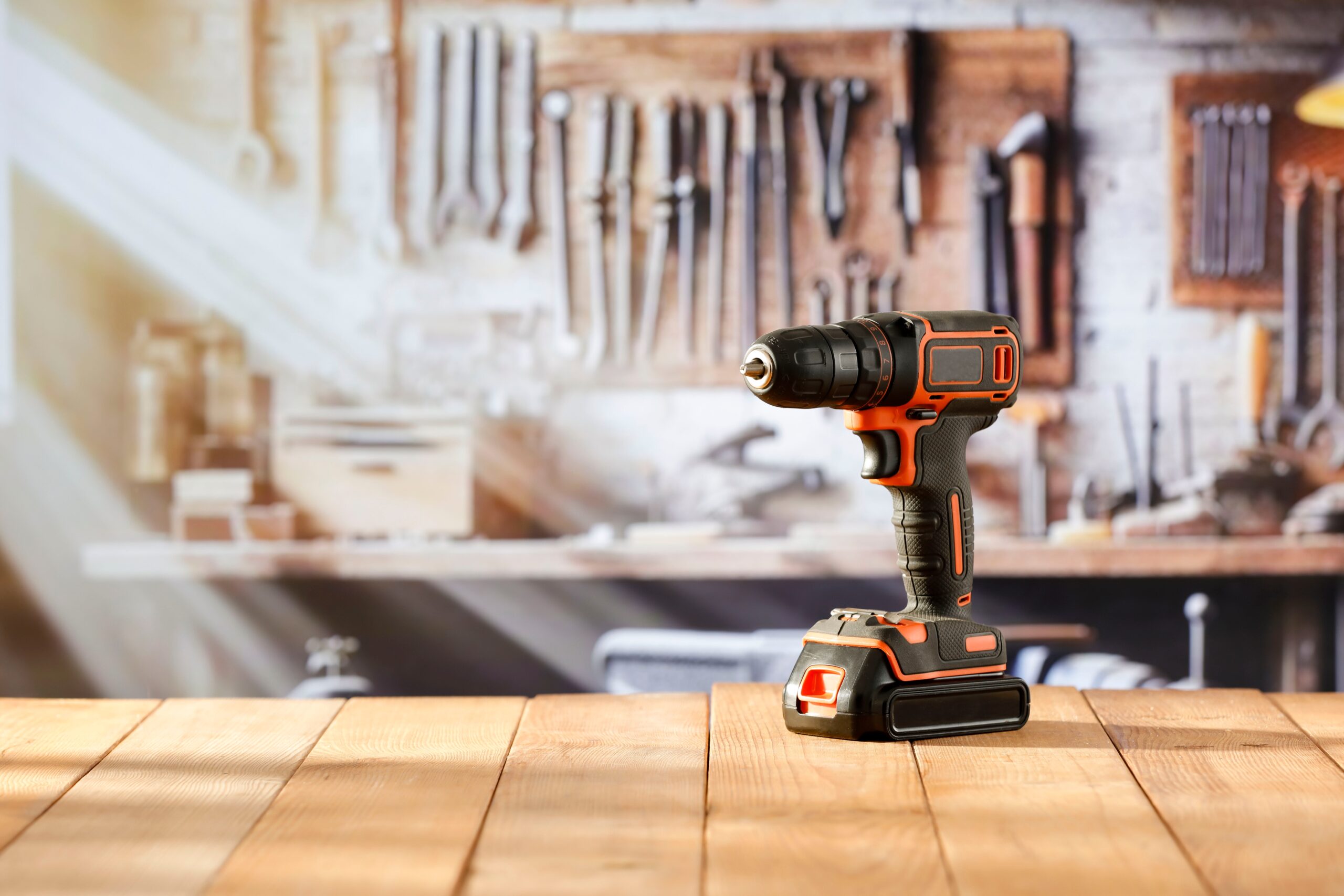
Power tools take up space and need environments that protect their motors, batteries, cords, and internal components. With the right setup, you can keep them safe, extend their lifespan, and reach them easily during projects. This section breaks down the best storage approaches for cordless tools, corded equipment, large machinery, and category-specific tools.
Battery-Powered Tools
Cordless tools perform best when their batteries stay cool, dry, and protected from temperature swings. Extreme heat and cold shorten battery life, so store batteries off the ground, away from windows, and away from heaters or uninsulated exterior walls.
A designated charging station helps keep things organized. Use a wall-mounted power strip, cable clips, or a small shelf to keep chargers accessible without a tangle of cords. Make sure chargers have room for airflow to prevent overheating.
To preserve battery life:
- Remove batteries from tools when not in use
- Store batteries at a partial charge for long-term storage
- Avoid leaving batteries in direct sunlight or freezing environments
- Keep replacement batteries together in a labeled bin or drawer
Original cases work well for transporting tools, but custom shelves or wall-mounted battery racks often make daily work easier and save space.
Corded Power Tools
Corded tools are reliable but come with one big challenge—cord management. Velcro straps, cable wraps, or retractable cord wheels keep cables tidy and prevent damage. Avoid tightly wrapping cords around tools, as it can stress internal wiring.
Use wall-mounted hooks or brackets to store heavy corded tools safely. Shelving units and drawer systems help keep tools secure and dust-free.
If you move around your workspace often, a rolling tool cart lets you keep essentials nearby while maintaining a clear workflow. Heavy-duty shelving is useful for items that are too large for drawers but still need stable support.
Large Power Equipment
Tools like table saws, miter saws, generators, pressure washers, and air compressors take up significant floor space—often limiting how efficiently you can move around your garage or workshop.
Mobile bases and workstation stands make it easier to reposition equipment, especially in multipurpose spaces. Look for adjustable or locking casters that keep tools stable during use.
For floor space optimization:
- Store seasonal tools (like generators or pressure washers) toward the back or in a storage unit
- Use foldable or collapsible stands for tools that only come out occasionally
- Create zones for cutting, sanding, and assembly to avoid crowding
Tool-Specific Storage
Some tools benefit from tailored storage solutions that keep parts, blades, and accessories organized.
| Tool | How To Store |
|---|---|
| Drills and drivers | Wall-mounted racks or custom drill docks keep tools and batteries paired together. |
| Circular saws and jigsaws | Shelves with blade guards or built-in slots help prevent damage. |
| Sanders and grinders | Store with sanding discs or wheels close by for convenience. |
| Routers and accessories | Keep in a dedicated case so bits stay sorted and protected. |
| Nail guns and pneumatic tools | Store in dry areas to prevent internal rust. |
Choosing the right setup depends on what you use most often and how much space you have to work with.
Hand Tool Storage Ideas
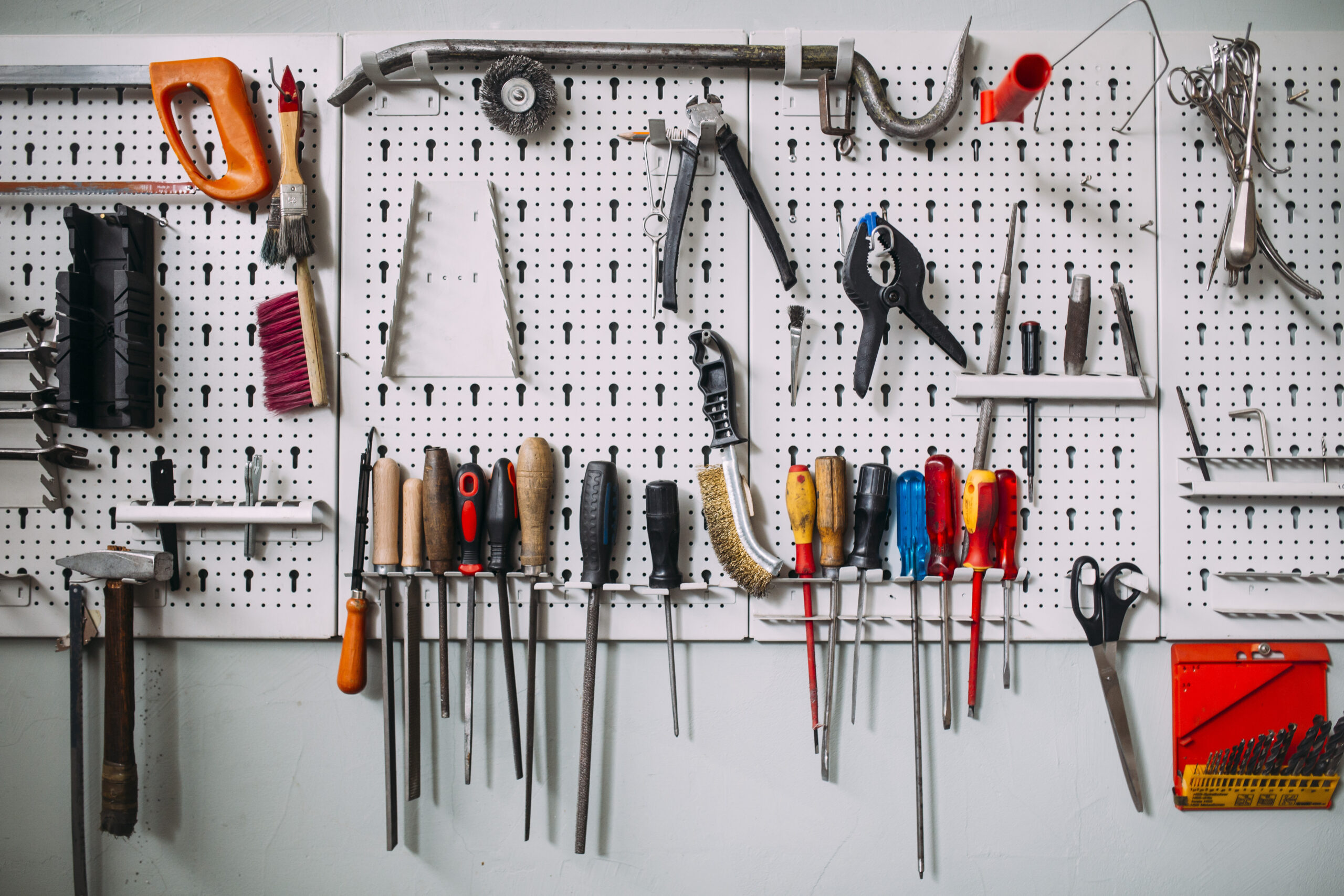
Hand tools are the backbone of any toolkit, and when they’re organized well, your workspace immediately feels more functional. This section dives deeper into wall‑mounted systems, portable setups, drawer organization, and specialized tool storage—giving you a range of options that balance visibility, protection, and efficiency. Each approach is designed to support how you work, not force you into a system that doesn’t fit your space.
Wall-Mounted Systems
Wall-mounted systems shine when you need tools visible, accessible, and off your work surfaces. These setups help you take advantage of vertical space while keeping your most-used items at eye level.
- Pegboards offer unmatched flexibility. You can rearrange hooks and shelves anytime, though lighter hooks may shift if overloaded.
- French cleat systems are sturdy and modular. They support custom tool holders—great for oddly shaped tools or growing collections.
- Magnetic tool bars keep metal tools lined up and accessible. They’re perfect for screwdrivers, pliers, and small wrenches.
- Shadow boards add accountability by showing exactly where each tool belongs, reducing lost time and helping you maintain order in shared spaces.
- Slatwall systems support heavier tools with reinforced panels and specialized hooks. They’re ideal for garages and professional-grade setups.
Portable Storage
Portable storage helps you take the tools you need wherever the job is happening—whether it’s across the garage or across town. These options balance durability with convenience, making them staples for DIYers and professionals.
- Toolboxes and chests offer secure compartments and structured storage for essential tools.
- Rolling tool cabinets provide large storage capacity and mobility, ideal for garages or workshops with frequent layout changes.
- Tool bags, totes, and bucket organizers keep must‑have tools ready for quick jobs or job-site work.
- Cantilever toolboxes expand outward, giving you a full overview of small parts and hand tools without digging through layers.
Drawer and Cabinet Systems
When you need dust protection and a clear visual layout, drawers and cabinets become essential. They keep tools clean and organized while offering smart customization options.
- Foam tool organizers prevent shifting and protect sharp edges.
- Drawer dividers and inserts keep tools grouped neatly and make retrieval easier.
- Kaizen foam can be customized to the exact shape of each tool, making it clear when something is missing.
- Tool chest organization hierarchy helps you work smarter by storing heavy tools in the bottom drawers and frequently used items at eye level.
Specific Hand Tool Storage
Some tools benefit from storage solutions tailored to their shape, weight, or use frequency. These approaches help you maintain the quality of your tools while speeding up your workflow.
| Hand Tool | How To Store |
|---|---|
| Wrenches and sockets | Use wrench rails or size-labeled socket rails for quick identification. |
| Screwdrivers | Stands, wall racks, or magnetic holders keep them visible and easy to grab. |
| Hammers and mallets | Hanging brackets or hammer racks prevent clutter and protect handles. |
| Clamps | Use clamp racks or wall-mounted bars to prevent warping and keep them accessible. |
| Saw blades | Keep blades in sleeves, cases, or a labeled drawer to protect their edges from moisture and impact. |
A strong hand tool system blends visibility, accessibility, and protection, making sure every tool is right where you need it.
Small Parts and Accessories Storage
Small hardware can quickly overwhelm drawers if not stored intentionally. Integrating small parts systems into your hand tool setup keeps everything easy to find and prevents duplicated purchases.
| Storage Solution | Description |
|---|---|
| Hardware organizers and bins | Adjustable dividers keep screws, bolts, and anchors separated. |
| Nail and screw systems | From divided cases to wall-mounted drawers, help maintain high-volume items. |
| Drill bit and router bit cases | Protect edges and prevent bits from scattering. |
| Sandpaper and abrasives | Stay in better shape when stored flat or vertically. |
| Saw blade storage solutions | Prevent dulling from friction and moisture. |
| Clear containers | Make it easy to see what you have without opening every bin. |
| Labels | Keep categories consistent and prevent drawers from becoming catch-alls. |
| Small parts drawer cabinets | Offer modular, high‑capacity storage for large hardware collections. |
Workshop and Garage Tool Storage Ideas
Workshops and garages offer plenty of room to work, but without a plan, even large spaces fill up fast. The strongest setups combine smart use of vertical space, thoughtful DIY builds, and a workflow that supports the way you move through projects. This section strengthens that flow, weaving each idea into a clearer story so everything feels connected rather than broken into standalone bullets.
Space-Saving Solutions
Before adding new systems, it helps to ask one question: How can you make your existing space work harder? That mindset can help you stay focused on solutions that open up your floor space and make daily movement easier.
- Overhead racks keep seasonal and seldom‑used tools out of the way while freeing up room for everyday projects.
- Ceiling‑mounted systems provide elevated storage for totes, clamps, or lightweight equipment, keeping tools close without crowding your workflow.
- Under‑stair storage transforms overlooked corners into storage zones for hardware bins, small power tools, or cleaning equipment.
- Fold‑down workbenches offer a full workspace when you need it, then fold flat to reclaim the area, an easy win for multipurpose garages.
- Corner shelves make use of angles that otherwise go to waste, carving out extra room for paints, accessories, or small tools.
Together, these ideas help your workshop feel more open and easier to move through, giving you room to focus on the project in front of you instead of working around clutter. And if you’ve tried every layout you can think of and your space still feels cramped, it may be time to consider a dedicated self‑storage unit, especially if seasonal tools or bulky equipment are taking over your garage.
Custom-Built Solutions
Once the main layout feels functional, custom projects can fine‑tune your space. These builds tailor your workshop to the tools you rely on most, helping you move naturally through different tasks.
- Tool walls are designed around your most‑used items
- Lumber racks built from simple 2x4s
- Mobile workbenches with drawers or cabinets underneath
- Rolling carts dedicated to specific tool sets or accessories
- Modular setups that expand as your collection grows
If you’re looking for a weekend project, this step‑by‑step guide to custom built‑ins offers a great place to start. Each build adds function without requiring a full remodel. They’re practical upgrades that shape your space around how you work.
Professional Workshop Layouts
For larger garages or dedicated workshops, layout becomes just as important as storage. Well‑planned zones reduce wasted steps, prevent buying duplicate tools, and keep projects flowing smoothly.
- Efficient workflow design means arranging areas in the order you naturally use them—cutting, sanding, assembly, finishing. A logical flow keeps the space from feeling chaotic.
- Station‑based organization groups tools and supplies where you need them most. Clamps near the assembly table. Abrasives near the sanding station. This small adjustment saves time on every project.
- Tool redundancy strategies help you avoid accidental duplicates by storing accessories and related tools together. When everything has a designated home, it’s easier to see what you already have.
- Mobile vs. fixed storage decisions depend on your workflow. Rolling carts support flexible layouts, while fixed cabinets work best in workshops with consistent routines.
For a deeper look at layout planning, this DIY professional workshop setup guide walks through zoning, workflow, and station design in a clear, step-by-step format.
Tool Storage in Self-Storage Units
Sometimes, your tools can outgrow the space you have at home. A storage unit can give you the extra breathing room you need, especially if you own large equipment, seasonal tools, or contractor-level gear.
When to Consider a Storage Unit
A storage unit can be helpful when you’re:
| Tool Storage Scenario | |
|---|---|
| Running out of garage or workshop space | |
| Storing seasonal tools like lawn equipment or snow blowers | |
| Keeping large equipment you don’t need year-round | |
| Protecting valuable or professional-grade tools | |
| Renovating your home, and need a temporary space for supplies | |
| Looking for a stable environment for sensitive equipment | |
| Managing business or contractor tool inventory that no longer fits in a work van or home garage |
A storage unit frees up room at home without forcing you to downsize your tool collection.
Choosing the Right Storage Unit

Not every unit works the same, so make sure you match your new storage space to the needs of your tools.
- Climate-controlled units are ideal for tools with batteries, electronics, or precision components.
- Drive-up units make loading and unloading heavy tools easier.
- Ground-floor access prevents unnecessary lifting and makes visits faster.
- Choosing the right size: Smaller collections may fit in a 5×5 unit, while large equipment, contractor inventory, or rolling tool chests often require a 10×10 or larger space. Choosing a size with room to move prevents overcrowding and helps you stay organized.
Pro Tip: If you’re storing large tools or heavy equipment, choose a drive-up unit for quick, no-stairs loading and unloading.
Preparing Tools for Storage
A little preparation helps tools stay in good shape.
| Tool Storage Checklist | |
|---|---|
| Clean and dry tools before storing | |
| Create a full inventory list and check whether your homeowner’s or renter’s insurance covers stored tools, or whether you need additional storage insurance | |
| Document serial numbers for insurance | |
| Use cases or covers to protect surfaces | |
| Add moisture absorbers to bins or boxes | |
| Keep tools off the floor by using shelves | |
| Label containers clearly for easy retrieval | |
| Leave walkways inside the unit so you can reach everything and keep your layout organized from day 1 |
Best Practices
Helpful habits to keep your tools safe:
| Best Practice | |
|---|---|
| Visit periodically to check conditions | |
| Remove batteries from cordless tools | |
| Drain fuel from equipment like generators | |
| Cover sharp tools and blades | |
| Use tool chests or cabinets inside the unit to keep items organized and off the floor | |
| Keep an inventory list at home |
Rust Prevention and Tool Maintenance
A few simple maintenance habits protect your tools and extend their lifespan. Moisture, dust, and inconsistent temperatures can wear down equipment quickly, but a little prevention keeps everything in better shape.
Cleaning Tools
Dirt and moisture weaken tools over time. Wipe them down after each use, remove debris from moving parts, and dry them fully before storing. Proper cleaning creates the foundation for rust prevention.
Rust Prevention Products
Sprays, oils, and protective coatings act as barriers between metal surfaces and moisture. Rust-prevention sprays, boiled linseed oil, and paste wax are simple options that keep corrosion at bay. Silica gel packets, dehumidifiers, and moisture absorbers help keep enclosed spaces dry, while VCI (Vapor Corrosion Inhibitor) products provide long-lasting protection inside drawers, cases, or storage bins.
Pro Tip: If you live in a humid climate, store a few silica packets in every toolbox or drawer. They’re an inexpensive way to reduce moisture and prevent rust.
Blade and Bit Care
Blades and bits stay sharper when stored properly. Keep cutting edges in cases, sleeves, or protective tubes to prevent accidental damage. Applying a light layer of tool oil or wax further protects edges from moisture and rust.
Environmental Control
Stable temperatures and low humidity reduce wear, especially for metal hand tools, precision instruments, and battery-powered equipment. If your workspace experiences big seasonal swings, climate-controlled storage offers the most consistent protection.
Regular Inspections
Check your tools periodically for early signs of rust, loose parts, or buildup. A quick inspection schedule, monthly for frequently used tools, seasonally for stored gear, helps you catch small issues before they spread.
Safety and Security Considerations
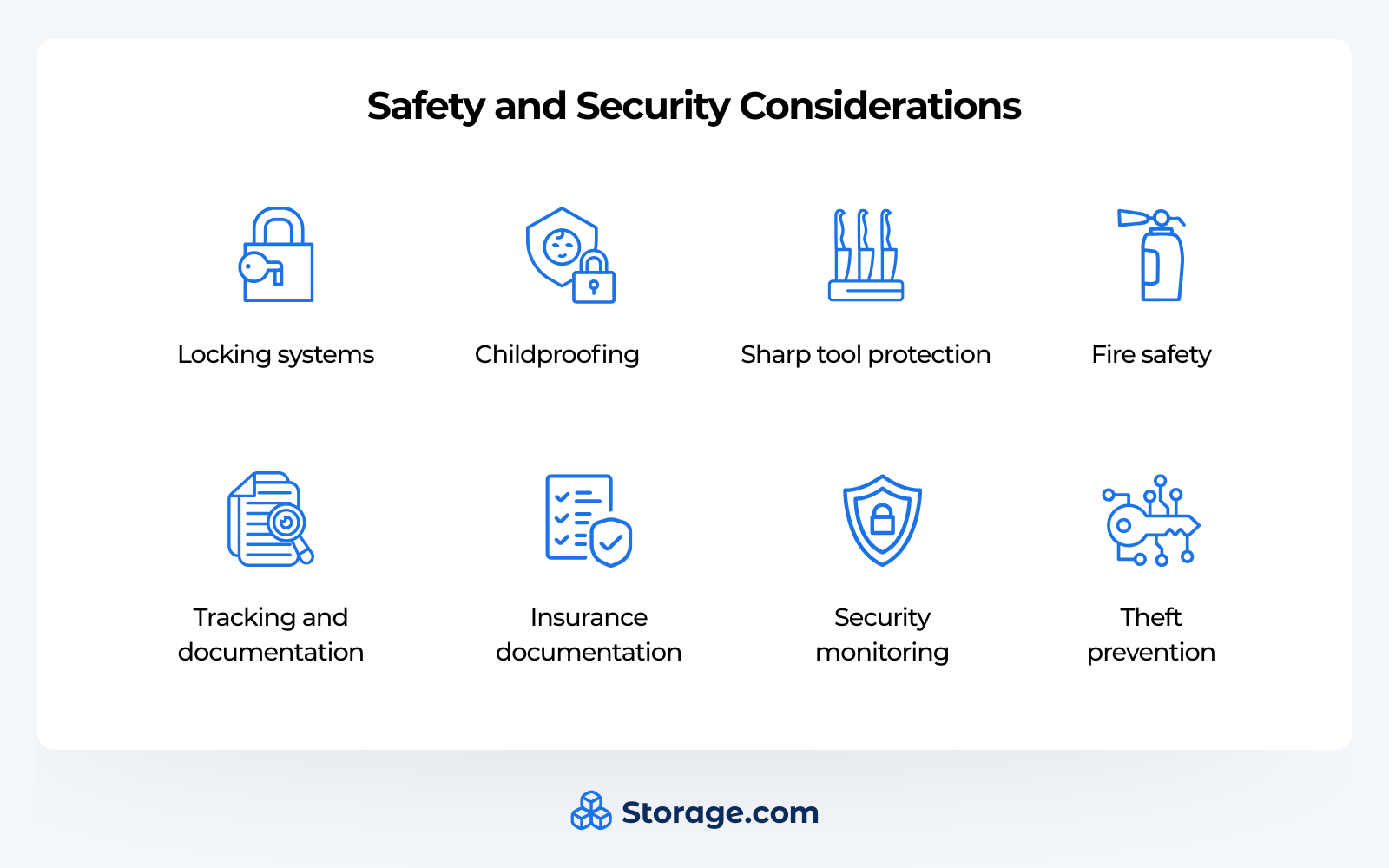
Good storage isn’t just about organization. It’s also about safety, for your household, your tools, and your workspace.
Locking Systems
Lockable chests, cabinets, and storage boxes help protect expensive tools and keep dangerous items out of reach. Heavy-duty locking cabinets also add a layer of theft prevention, especially for high-value equipment.
Childproofing
If children share your space, store sharp or hazardous tools high up, behind locked doors, or in childproofed cabinets. Add protective covers to blades, bits, chisels, and knives so even accidental contact stays safe.
Proper Blade and Sharp Tool Protection
Sharp tools should always be stored with sheaths, blade guards, or protective tubes. This prevents injuries and protects cutting edges from moisture and impact.
Fire Safety
Keep flammable materials, like paints, solvents, and oils, in approved, fire‑rated containers. Avoid storing gas-powered tools or fuel indoors unless they are fully drained. Ensure your workspace has proper ventilation and access to a fire extinguisher.
Tracking and Documentation
Record serial numbers and register equipment whenever possible. This helps with insurance claims and tool recovery if something goes missing. Keep documentation in both digital and physical formats.
Insurance Documentation
Maintain a current inventory list and check whether your homeowner’s, renter’s, or business insurance covers your tools, especially high-value equipment or contractor-grade gear. Add photos and receipts when possible.
Security Cameras and Monitoring
If you store tools in a garage or workshop, using simple security cameras or smart monitoring systems helps deter theft and provides helpful documentation if something happens.
Theft Prevention
Strong locks, well‑lit spaces, and secure doors all help reduce risk. Choosing storage units with cameras, gated access, and individualized entry codes adds an extra layer of protection. Inside your home or workshop, keep valuable tools in locking cabinets or chests and avoid leaving them visible from windows.
Budget-Friendly vs. Premium Tool Storage
Every tool setup looks different, and you don’t need premium systems to stay organized. Many people mix budget‑friendly ideas with a few higher‑end upgrades to build a setup that fits their space and budget.
DIY and Budget Options
These are great for getting organized without a big investment.
- Repurposed materials like pallets, old furniture, or reclaimed shelving
- Basic pegboard setups for visible wall storage
- Plastic storage bins for hardware and small parts
- Simple wooden shelving made from affordable lumber
- PVC pipe organizers for long‑handled tools or extension cords
Mid-Range Solutions
If you’re ready for stronger, more durable systems without going fully premium, these options provide a balanced upgrade.
- Pre‑made multi‑drawer tool chests
- Modular shelving systems that can grow with your collection
- Basic cabinet systems for enclosed storage
- Hybrid setups combining DIY builds with store‑bought components
Premium Investment Storage
Higher‑end solutions offer long‑term durability, heavy load capacity, and professional‑grade organization.
- Professional‑grade tool chests and cabinets
- Custom cabinet installations tailored to your workflow
- Modular workshop systems such as Gladiator, Craftsman, or Husky
- Climate‑controlled storage units for temperature‑sensitive or high‑value tools
- High‑security storage options with reinforced locks or steel construction
Why Investment Levels Matter (ROI Considerations)
Whether you choose budget, mid‑range, or premium systems, a thoughtful storage approach always provides a strong return on investment.
| Tool Storage Value | Why It Matters |
|---|---|
| Tool protection value | Prevents rust, damage, and unnecessary replacements. |
| Time savings | Organized spaces reduce searching, sorting, and setup time. |
| Safety improvements | Proper storage reduces trip hazards and keeps sharp tools covered. |
| Equipment longevity | Tools last longer when stored correctly, which saves money over time. |
Choosing the right tier is less about cost and more about creating a storage system that supports your workflow and helps your tools stay in great condition.
Tool Storage for Different Trades
Different trades have unique storage needs, and the right setup helps you work faster, stay organized, and protect your equipment from wear and tear. This expanded section adds depth, improves flow, and includes mobile job-site strategies to match the way professionals actually work.
Carpentry and Woodworking
Carpenters and woodworkers rely on tools that range widely in size. Clamp racks, router bit cases, blade sleeves, and mobile carts help keep everything accessible. Keeping sanding supplies near the woodworking station and blade storage near saws supports a natural workflow.
Automotive and Mechanics
Mechanics work with a large amount of small hardware, sockets, and specialty tools. Socket rails, magnetic trays, rolling work carts, and top-chest toolboxes keep fasteners and impact tools organized while supporting quick access during repairs.
Electrical Work
Electricians benefit from compact, protected storage. Small parts organizers, weather-resistant tool bags, and meter cases keep delicate instruments safe. Divided bins help store connectors, wire nuts, and specialty fittings without mixing.
Plumbing
Plumbing tools vary from small fittings to heavy pipe wrenches. Rolling bags, bucket organizers, and divided hardware bins make it easy to transport tools from one location to the next. PVC racks can hold extra pipe sections neatly.
HVAC
HVAC technicians often transport sensitive diagnostic equipment. Insulated cases, padded tool bags, and compact storage boxes reduce damage during travel. Keeping refrigerant gauges and meters in dedicated cases prevents tangling and impact wear.
Landscaping and Lawn Care
Outdoor tools require durable storage. Long-handled tool racks, wall hooks, and outdoor-rated cabinets help keep shovels, rakes, hedge trimmers, and leaf blowers organized. Fuel-powered equipment should be stored upright and away from moisture.
General Contracting
General contractors use a wide mix of tools and need systems that travel easily from one job to another. Rolling toolboxes, locking chests, and structured totes keep gear mobile. Storing accessories near their matching tools prevents accidental duplicates.
Mobile Tool Storage for Job Sites
For trades that move between locations, mobile systems keep tools protected and ready to go.
- Stackable modular tool systems like Milwaukee Packout, DeWalt ToughSystem, or Ridgid Pro Gear
- Weatherproof rolling toolboxes for rough job‑site conditions
- Truck‑bed tool boxes for secure transport
- Job‑site carts for frequently used tools
- Backpack tool bags for electricians, HVAC techs, and plumbers who climb ladders or move through tight spaces
These mobile setups keep essential tools organized and protected, even when the job takes you far from your main workshop.
Bringing Your Tool Storage System Together
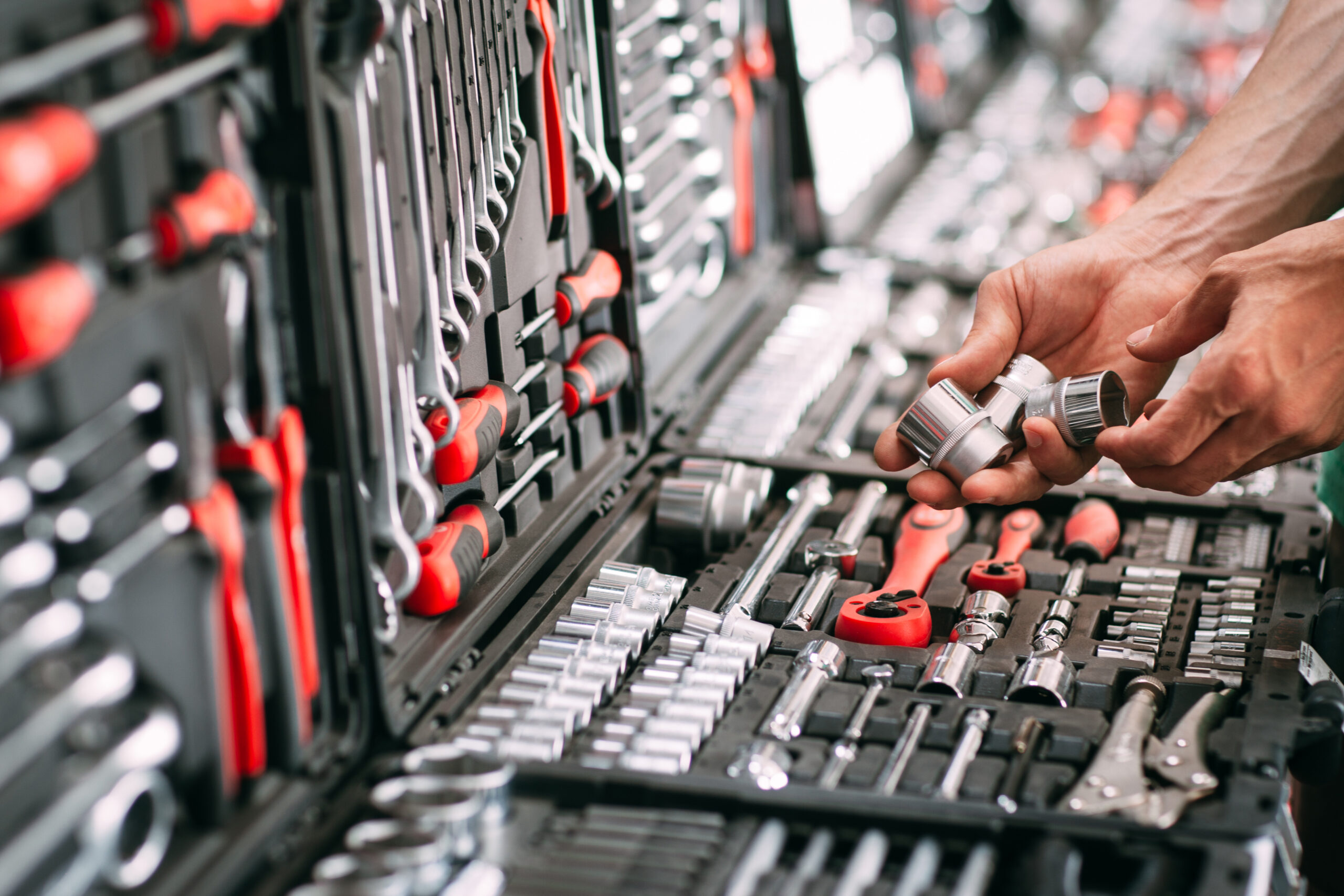
A well-organized tool setup keeps your workspace safer, your projects running smoothly, and your equipment in better condition for the long haul. With the right systems in place, you’ll spend more time building and far less time searching.
Whether you’re organizing a garage, upgrading a workshop, or storing contractor-grade tools, the strategies in this guide can help you create a setup that fits your space and supports the way you work.
And if you’re running out of room at home, or need a climate‑stable place for high‑value equipment, a storage unit can give your tools the space and protection they need to stay ready for every project.