

Article takeaways
- Peak moving season runs from May through September, with the highest demand and pricing between June and August
- Moving costs vary widely based on distance, volume, and timing, with local moves averaging $800–$2,500 and long-distance moves exceeding $10,000
- Mid-week, mid-month, and off-peak moves are typically the most cost-effective
- Booking movers and storage units several weeks in advance helps secure better pricing and availability
- Storage units provide flexibility during moves, especially when timelines overlap or storage space is limited
- Choosing the right storage unit size and type depends on your home size, belongings, and storage duration
Moving comes with a lot to manage at once. Timing, cost, scheduling, and logistics all need to line up. Missed details can lead to delays, limited availability, or higher prices.
This moving FAQ covers the most common questions people ask when planning a move, including when to move, how much it costs, whether to tip movers, and how to choose the right storage unit size. Clear answers up front make planning easier and reduce last-minute decisions.
If your move involves overlapping timelines or extra items, comparing storage units early and working from a clear plan, like a free printable moving checklist, helps keep things on track.
When is Peak Moving Season?
Timing is one of the biggest factors that affects both cost and availability when planning a move.
Peak moving season runs from May through September, with the highest demand between June and August.
Demand increases during this time because of school schedules, lease cycles, and more predictable weather. As a result, moving companies book up faster, and prices tend to rise.
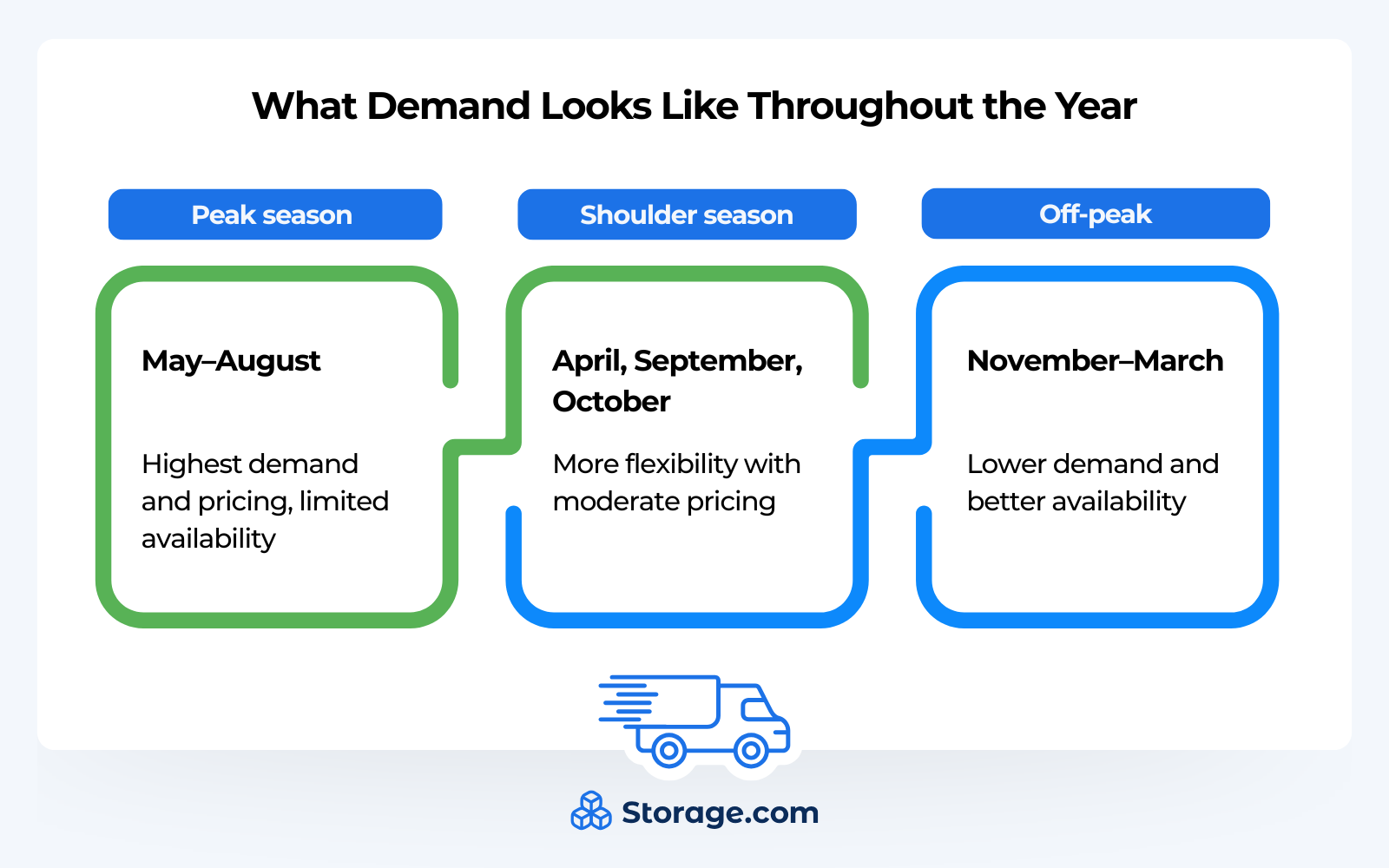
What Demand Looks Like Throughout the Year
- Peak season (May–August): Highest demand and pricing, limited availability
- Shoulder season (April, September, October): More flexibility with moderate pricing
- Off-peak (November–March): Lower demand and better availability
For a more detailed breakdown of timing and how it affects availability, see how moving season and storage unit use intersect.
Cost Implications
Moving during peak season often means higher hourly rates, minimum time requirements, and fewer scheduling options. Storage units may also be harder to find in high-demand areas.
Planning Tips
- Book movers and storage units 6–8 weeks in advance during peak months
- Choose mid-week or mid-month dates when possible to reduce costs
- Use a storage unit as a buffer if your move-in and move-out dates don’t line up
If timing affects availability, it also directly affects what you’ll pay.
The cheapest time to move is typically mid-week, mid-month, and during the off-peak season (November through March).
Demand is lower during these periods, which makes it easier to secure lower hourly rates and better availability.
Cost-Saving Windows
- Mid-week (Tuesday–Thursday): Lower demand than weekends
- Mid-month: Avoids lease turnover spikes at the beginning and end of the month
- Off-peak season: Lower pricing across movers and storage units
Combining these factors lowers total moving costs.
What Is the Cheapest Time to Move?
The cheapest time to move is typically mid-week, mid-month, and during the off-peak moving season (November through March).
The demand for movers, trucks, and moving containers is lower during these periods, which makes it easier for you to secure lower hourly rates and better availability.
Cost-Saving Windows
- Mid-week (Tuesday–Thursday): Lower demand than weekends
- Mid-month: Avoids lease turnover spikes at the beginning and end of the month
- Off-peak season: Lower pricing across movers and storage units
Combining these factors can help you lower your total moving costs and keep your budget intact.
How Much Does a Moving Company Cost?
Once you’ve narrowed down the timing of your move, the next question is: How much does it cost to move?
Local moves typically cost between $800 and $2,500, while long-distance moves can range from $2,500 to $10,000 or more, depending on distance and volume.
The total moving costs can vary based on location, distance, total amount being moved, and any additional services you choose (like white-glove moving services).
Real-World Cost Examples
Prices vary depending on where you’re moving as well. Larger cities and high-demand metro areas tend to have higher labor rates, while smaller markets may be more affordable. Long-distance moves between major cities can also increase costs due to fuel, tolls, and route complexity.
These ranges give a general idea of what most people can expect based on home size and distance:
- Studio or 1-bedroom local move: $800–$1,500
- 2–3 bedroom local move: $1,500–$3,000
- Long-distance move (2–3 bedroom): $4,000–$8,000+
Local Moves
Local moves are usually priced at an hourly rate. Most jobs require a crew of 2–4 movers, and they can take between 4 and 10 hours, depending on the size of the home and the total amount of items being moved.
Long-Distance Moves
Long-distance pricing is typically based on weight and distance. Some companies offer binding estimates, while others provide non-binding quotes that can change based on actual load weight.
Cost Control Tips
- Get at least three written estimates
- Avoid large upfront deposits
- Compare availability across multiple dates
Be cautious of quotes that come in significantly lower than others. Lowball estimates often increase after your belongings are loaded or once the move is underway. Additional charges can also come from stairs, long carry distances, packing materials, or changes to delivery timing, so it helps to confirm what is included in your estimate upfront.
Using a storage unit during an overlap period reduces time pressure and helps avoid rushed decisions that increase costs. If you’re coordinating transportation, it also helps to understand whether moving truck rentals are available through storage facilities.
Do You Tip Moving Company Movers?
Once logistics and pricing are set, tipping is one of the last details people tend to question. Tipping movers is not required, but it is a common and appreciated practice.
A simple rule: tip based on effort and time. For most moves, that falls within a predictable range.
Typical Tipping Guidelines
- Local moves: $20–$50 per mover
- Full-day or long-distance moves: $50–$100 per mover
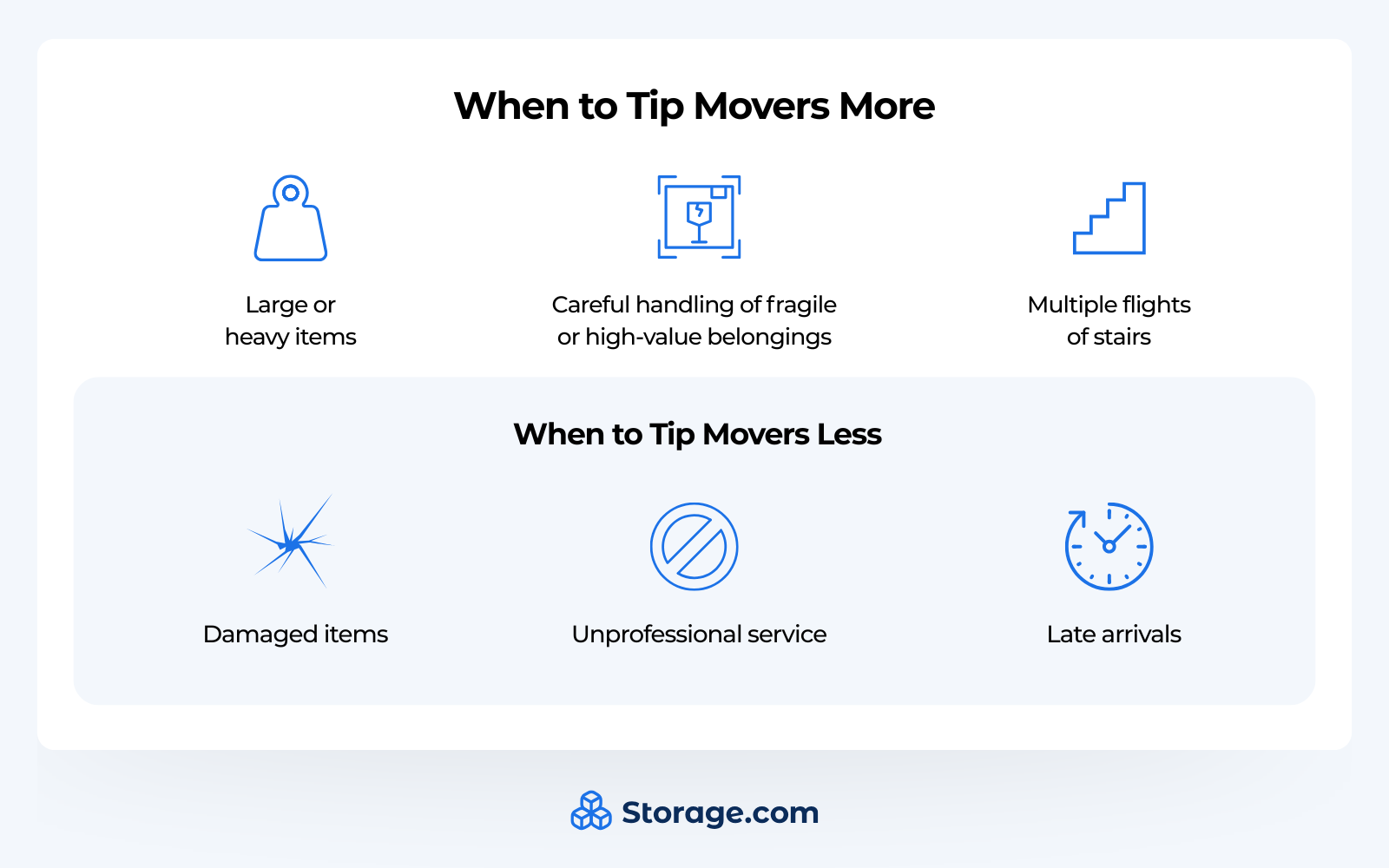
When to Tip More
- Large or heavy items
- Multiple flights of stairs
- Careful handling of fragile or high-value belongings
When to Tip Less
- Damaged items
- Late arrivals
- Unprofessional service
Cash is still the most common method, though digital payments are increasingly accepted. Tip each mover individually when possible. Having cash ready ahead of time avoids last-minute delays on moving day.
How Long Does Moving Take?
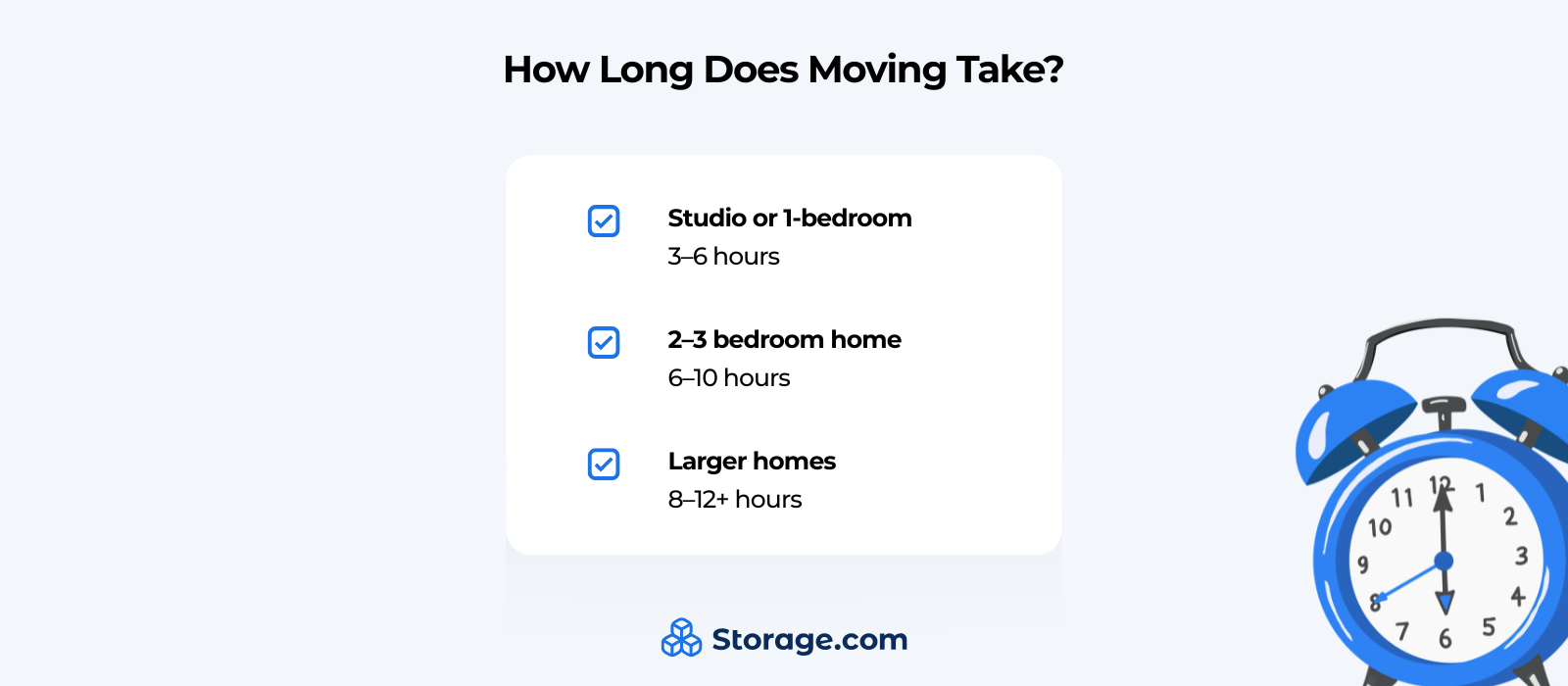
Most local moves take between 4 and 10 hours, while long-distance moves can take several days depending on distance and logistics.
Typical Timelines
- Studio or 1-bedroom: 3–6 hours
- 2–3 bedroom home: 6–10 hours
- Larger homes: 8–12+ hours
Packing, disassembly, and travel time all affect total move time.
What Should You Not Pack in a Moving Truck?
How you pack the moving truck can also impact how smoothly your move goes. Certain items should not be packed in a moving truck due to safety, legal, or damage risks.
Avoid Packing
Flammable or hazardous materials, perishable food, important documents like IDs or financial records, and high-value or irreplaceable items should stay with you instead of going on the truck.
Keep these items with you during the move to avoid loss or damage.
What is the Best Storage Unit Size for a House Move?
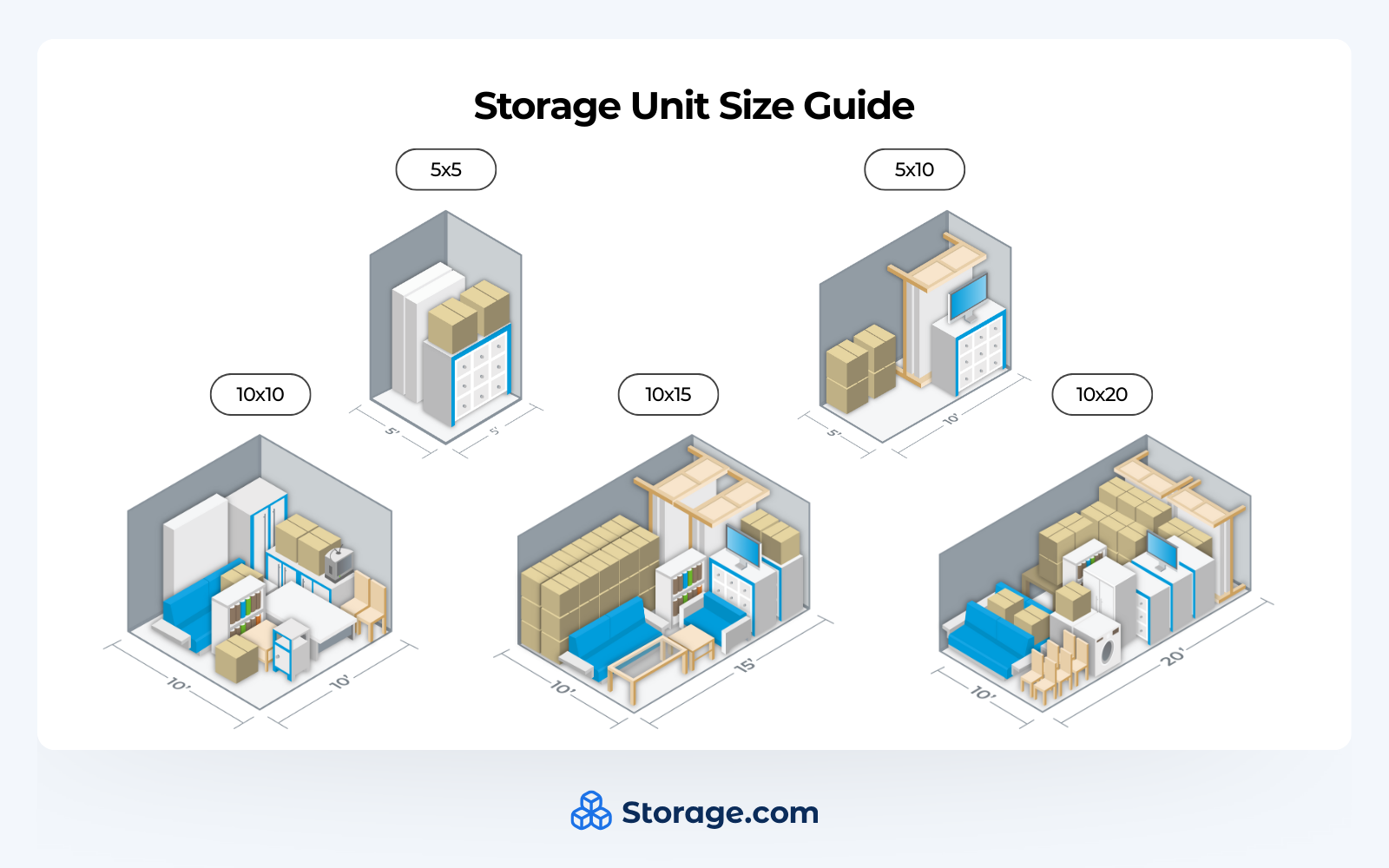
Once packing is underway, storage becomes part of the planning process for many movers. The right storage unit size depends on the size of your home and how much you need to store during the move.
General Size Guidelines
- Studio or 1-bedroom: 5×10 or 10×10
- 2-bedroom home: 10×15 or 10×20
- 3–4 bedroom home: 10×20 or 10×30
- 5+ bedroom home: 10×30 or larger
For a more detailed breakdown on storage unit sizes, check out the full storage unit size guide.
You can also review specific layouts for common sizes like a 5×10 storage unit, a 10×20 storage unit, or a 10×30 storage unit.
What Affects Storage Needs
Large furniture, appliances, types of items going into storage (like antiques, heirlooms, art, etc.), seasonal equipment, and the total number of boxes will be an indicator of how much space you’ll need.
Climate Controlled vs Standard Units
Items like wood furniture, electronics, or documents are better stored in climate-controlled storage units, especially during long-term storage or extreme weather conditions.
Watch this video to learn more about climate-controlled storage:
Short-term storage is usually about access and flexibility during a move, while long-term storage focuses more on protecting items from temperature changes, humidity, and extended exposure.
Packing Considerations
Organizing and labeling your inventory ahead of time makes it easier to maximize space and access items when needed. Creating a full inventory of your belongings also helps prevent overestimating or underestimating unit size.
How to Avoid Moving Scams
Moving scams might not seem like a real thing to worry about, but there are a few red flags you should watch out for.
Quotes that are significantly lower than others, large upfront deposits, missing written estimates, or incomplete licensing and contact details are all signs to pause and verify before moving forward.
Always compare multiple quotes and verify company credentials before booking.
Additional Moving and Storage Questions
How Far in Advance Should You Book Movers?
Most moves should be booked at least 4–8 weeks in advance, depending on the time of year and your location.
During peak season, availability becomes limited quickly, especially for weekend dates. Booking earlier gives you more flexibility and helps avoid premium pricing.
If you’re moving during a high-demand period, it also helps to secure storage units early so you’re not forced into last-minute decisions.
Should You Hire Movers or Move Yourself?
Hiring movers is typically the better option for larger homes or long-distance moves, especially when dealing with heavy or fragile items. DIY moves are more common for smaller spaces or shorter distances.
Professional movers reduce physical strain and can speed up the process, but they come at a higher cost. DIY moves offer more control but require more time and coordination.
For many moves, a hybrid approach works well, handling packing and loading yourself while hiring help for transportation or heavy lifting.
What Should You Pack First When Moving?
Start with items you use the least, such as seasonal decorations, storage items, and infrequently used kitchenware.
Packing in phases keeps your home functional while reducing last-minute stress. Labeling boxes clearly and grouping items by room also makes unpacking more efficient.
Creating a structured packing plan alongside an inventory of your belongings helps ensure nothing gets overlooked.
How Do You Choose the Right Storage Unit?
Choosing the right storage unit depends on three things: how long you’ll need it, what you’re storing, and how often you’ll need access.
Short-term moves often require easy access and flexible sizing, while long-term storage may require climate control and more protective packing strategies.
Renting a storage unit comes down to comparing access, size, and terms. Review how to rent a storage unit to compare options and avoid delays.
When Should You Use Storage During a Move?
Storage is most useful when your move-in and move-out dates don’t align or when you need to stage a home for sale.
It also reduces clutter during packing, making it easier to stay organized and move in phases rather than all at once.
Using storage as a buffer gives you more control over timing and prevents rushed decisions that lead to higher costs or missed details.


