
Article takeaways
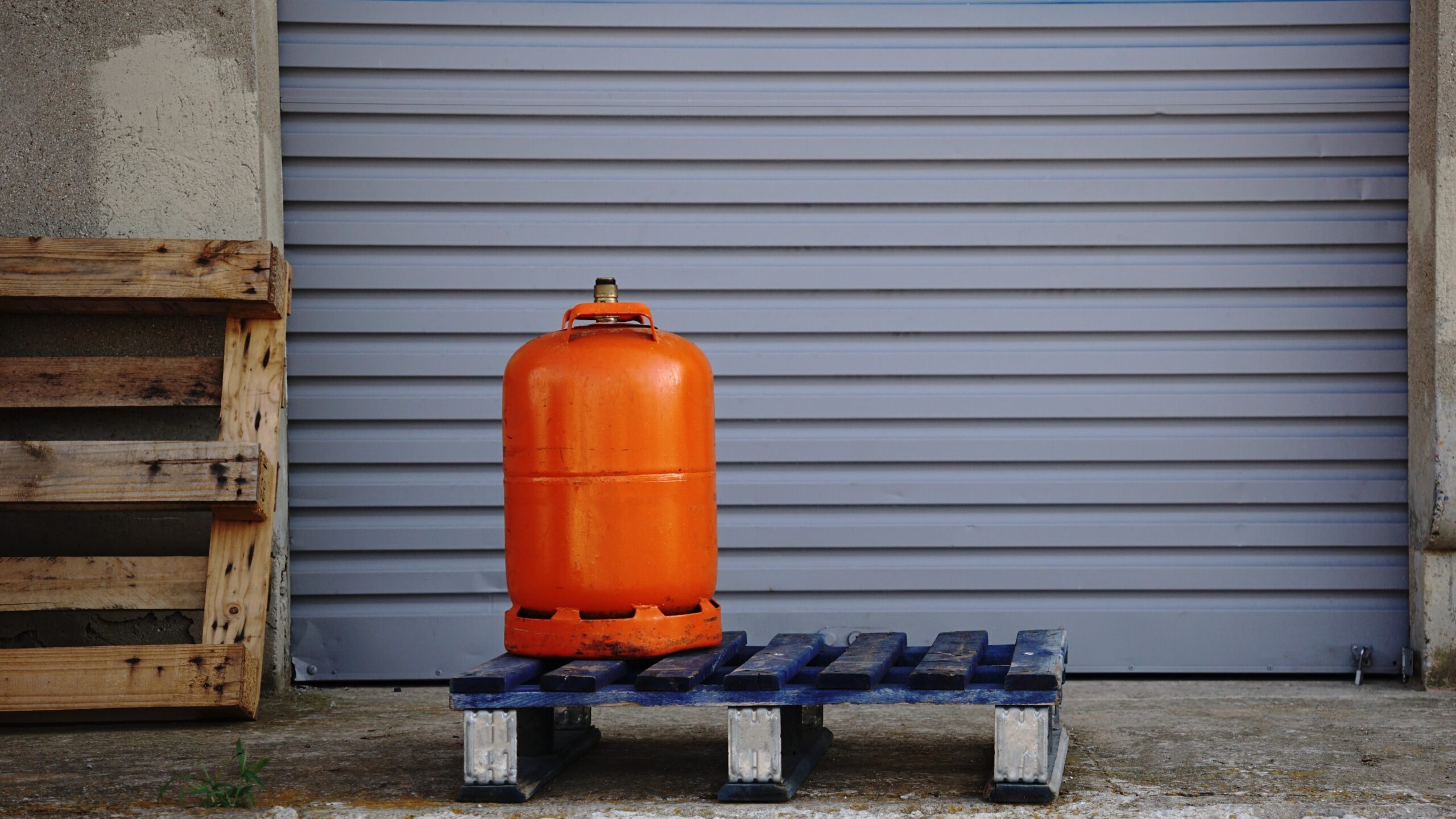
- The safest way to store a propane tank is outdoors, upright, in the shade, in a ventilated area, and at least 3 feet away from buildings or heat sources.
- Propane tanks should never be stored in an enclosed space.
- Damaged or broken propane tanks should be properly disposed of or recycled.
There are plenty of reasons you may have a propane tank or two at home. Maybe you’re powering a grill or running a heater, or maybe you’re using it to power appliances or heat water. Whatever the case may be, propane needs special attention to keep it from leaking, rupturing, or causing a fire.
It can be easy to forget about your propane tanks in the offseason, so consider inspecting your propane tank and properly storing them as part of your yearly home maintenance to ensure they don’t get overlooked.
Following the right legal guidelines and safety tips while storing your propane and propane accessories will help prevent costly and avoidable accidents. In this article, we’ll go over the ins and outs of safely storing propane tanks, from the proper positioning to the correct procedure for disposing of empty ones.
What should I pay attention to when storing my propane tanks at home?
Propane tanks come in 20 lb, 30 lb, and 100 lb cylinders, and your choice will depend on your at-home propane needs. United States federal and state regulations for using and storing propane are always being updated; for example, 2025 federal regulations require small propane tanks to be stored vertically in a well-ventilated area, and public propane storage areas need to be clearly labeled and have restricted access to authorized personnel.
Pay attention to tank temperature and pressure as well. While propane is usually a gas in temperatures above -44 degrees Fahrenheit, it becomes a less volatile liquid when compressed between 100 and 200 psi, making it easier to store.
Watch the temperature outside the tank, though; cold can lower the vapor pressure and prevent gas from reaching the appliances it needs, and heat can cause the liquid to vaporize.
How do I store propane tanks properly?
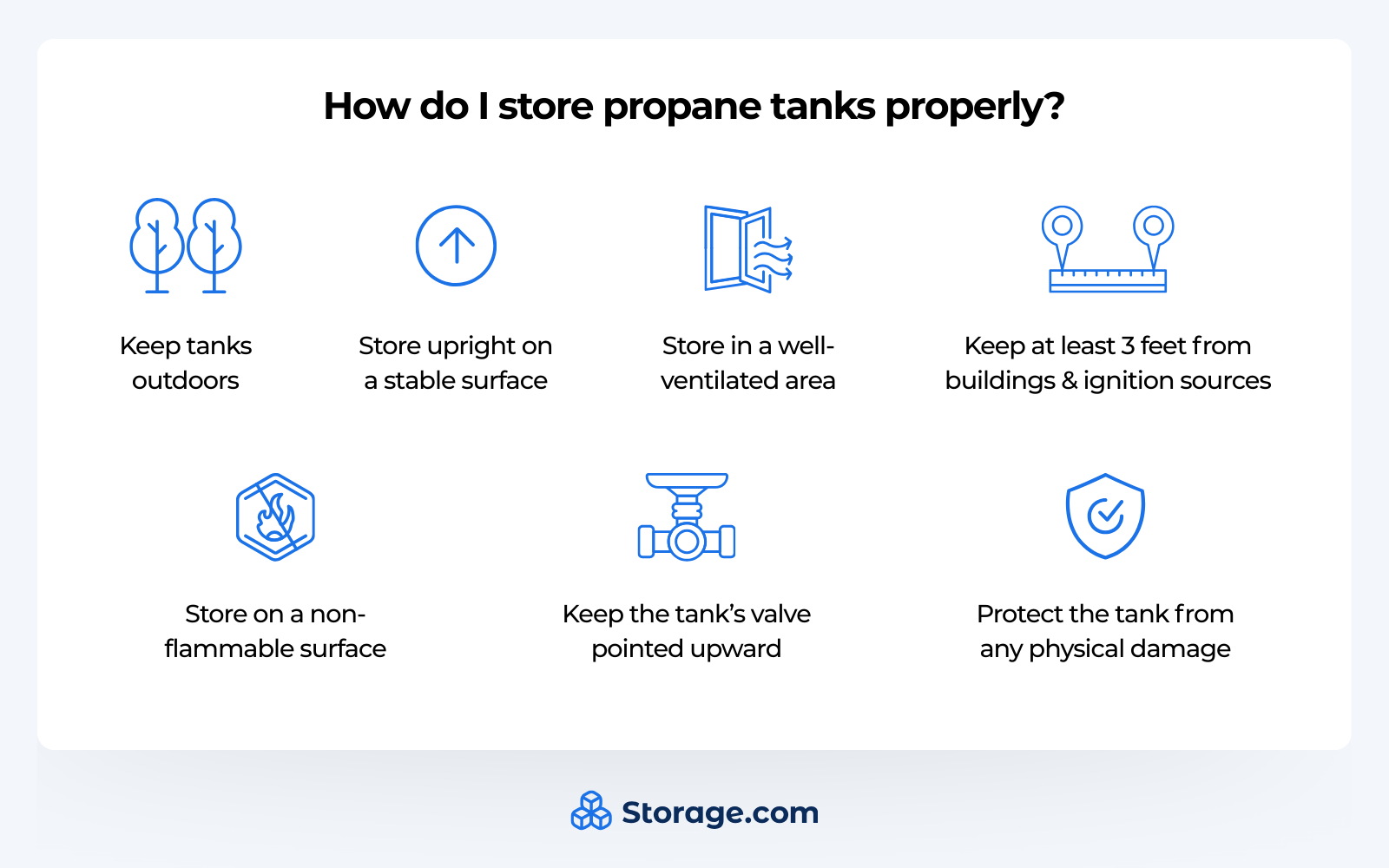
When storing your propane tanks at home, follow these tips for best results:
- Keep tanks outdoors.
- Store tanks upright on a stable surface. You can purchase brackets to keep propane tanks stable.
- Store tanks in a well-ventilated area so any leaks don’t build up in an enclosed space and create a fire hazard.
- Keep residential propane tanks at least 3 feet from buildings and ignition sources.
- Store residential propane tanks on a non-flammable surface, or use a bracket to keep them off the ground.
- Keep the tank’s valve pointed upward and don’t lose the cap.
- Protect the tank from any physical damage.
You are generally not allowed to store propane tanks indoors unless they’re extremely small and disposable cylinders; 1 lb tanks for hand torches, for example.
If you’re transporting propane tanks in your car or truck, make sure you get a stabilizing bracket or strap for each tank so they don’t get damaged while you’re on the move.
Can I store propane tanks in my garage?
In almost all cases, you can’t safely store a propane tank in your detached or attached garage. It’s an enclosed space, and any leaks or vapors from your tanks can collect and cause a fire or explosion. 1 lb. camping cylinders are the only legal exception for indoor storage, as they don’t contain enough flammable gas to pose a serious hazard.
However, the outdoor space near the garage is a suitable location for setting up propane storage, provided it’s well-ventilated. Use the garage space to store anything you would otherwise have in your propane storage area.
If your garage is the only storage space you have at home, consider renting a storage unit to clear some outdoor space for your propane tanks. They’re cheap, easy to maintain, and will free up storage at home for you to reorganize and make room for gas cylinders outside.
How do I maintain and store propane tanks during the winter?
Cold weather tends to lower propane pressure, so if you’re using your tanks for heating or grilling during the winter, expect the fuel to take a little longer to reach the burner when starting up. You can keep the tank warmer by insulating it with a non-flammable cover, maintaining pressure, and keeping the fuel stable. The cold can also lead to brittle, damaged hoses, so apply some ammonia-free soap and water to the hose to check for leaks before you fire things up.
When storing tanks that you aren’t using during winter, make sure you properly inspect the tank before putting it away. Keep moisture away from the tank, as snow and ice can cause the metal tank to rust and can lead to leaks. Use a tank stabilizer to keep the tank off the ground and stable during storage, and make sure the regulator is pointed with the hole downward so any condensation can drain away.
What should I do with old propane tanks?
The fuel in a propane tank never expires if stored correctly, but the tank itself is another story. Corrosion, leaks, and dents are all good and easily visible reasons to retire your tank, but failing a recertification or just having consistently poor performance can point towards a tank going bad. Make sure your tank gets recertified every five years to make sure it’s still usable; if it isn’t, here are a few ways to safely dispose of tanks.
- Take it to an exchange program. Many hardware and grocery stores partner with propane gas providers to offer a discount if you want to trade an old propane tank for a fresh, cleaned, and inspected tank.
- Dispose of it at a hazardous waste facility. Research local facilities in your area and take your old tank in so the trained staff can properly dispose of it for you.
- Sell the unused propane to a buyback program. Some propane retailers will purchase the unused propane in a retired tank so you can dispose of the empty tank safely with a little extra cash.
You can’t recycle propane tanks at most waste facilities, and it’s not a good idea to keep an old tank around, as there’s a possibility of some fuel left inside even after emptying. However, most propane companies will recycle your tanks at no cost; just bring your tank to an exchange site and make sure it’s marked for recycling, and they’ll handle the rest.
If you need space to keep old tanks while you’re trying to dispose of them, don’t put them in a storage unit! Use a storage unit to clear out space around your house and make space outdoors for them.
What should I avoid doing when storing propane tanks?
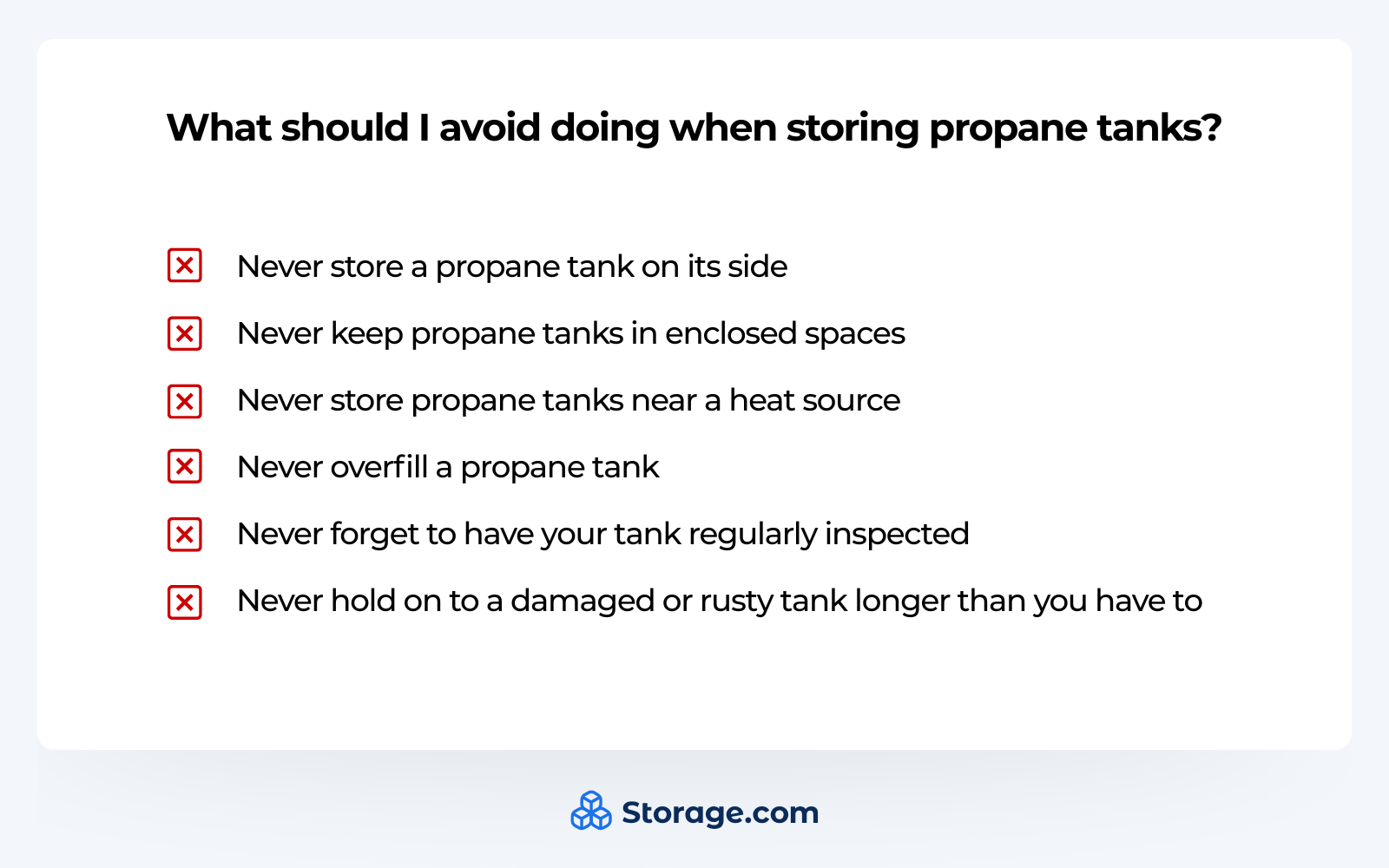
We’ve been over many of the “do’s” when storing propane tanks; here are some of the “don’t’s”.
- Never store a propane tank on its side. This can cause the propane to leak out of the valve, especially if the tank is full. Always store tanks upright and off the ground.
- Never keep propane tanks in enclosed spaces. Any leaks can collect in an enclosed space and present a fire or explosion hazard. Make sure you keep your tanks outdoors in a well-ventilated area.
- Never store propane tanks near a heat source. Heat and propane together are a great way to end up with an out-of-control fire.
- Never overfill a propane tank. Overfilled tanks can leak and rupture.
- Never forget to have your tank regularly inspected. Inspections can catch issues with the tank that might become a bigger problem down the line.
- Never hold on to a damaged or rusty tank longer than you have to. Dispose of these tanks as quickly as possible.
How can I find storage to clear out space for propane at home?
Propane is a useful but dangerous source of fuel, so making sure you keep unused propane tanks in a well-ventilated outdoor area is a must. Store them upright and off the ground, and make sure you keep moisture away while you do. Check your state and local regulations for propane storage to make sure you’re following the law and avoiding any potential fire hazards.
Need to make space outdoors for propane storage? Consider booking a storage unit through Storage.com! Our built-in search tool will help you compare prices and sort nearby facilities by the features you need.