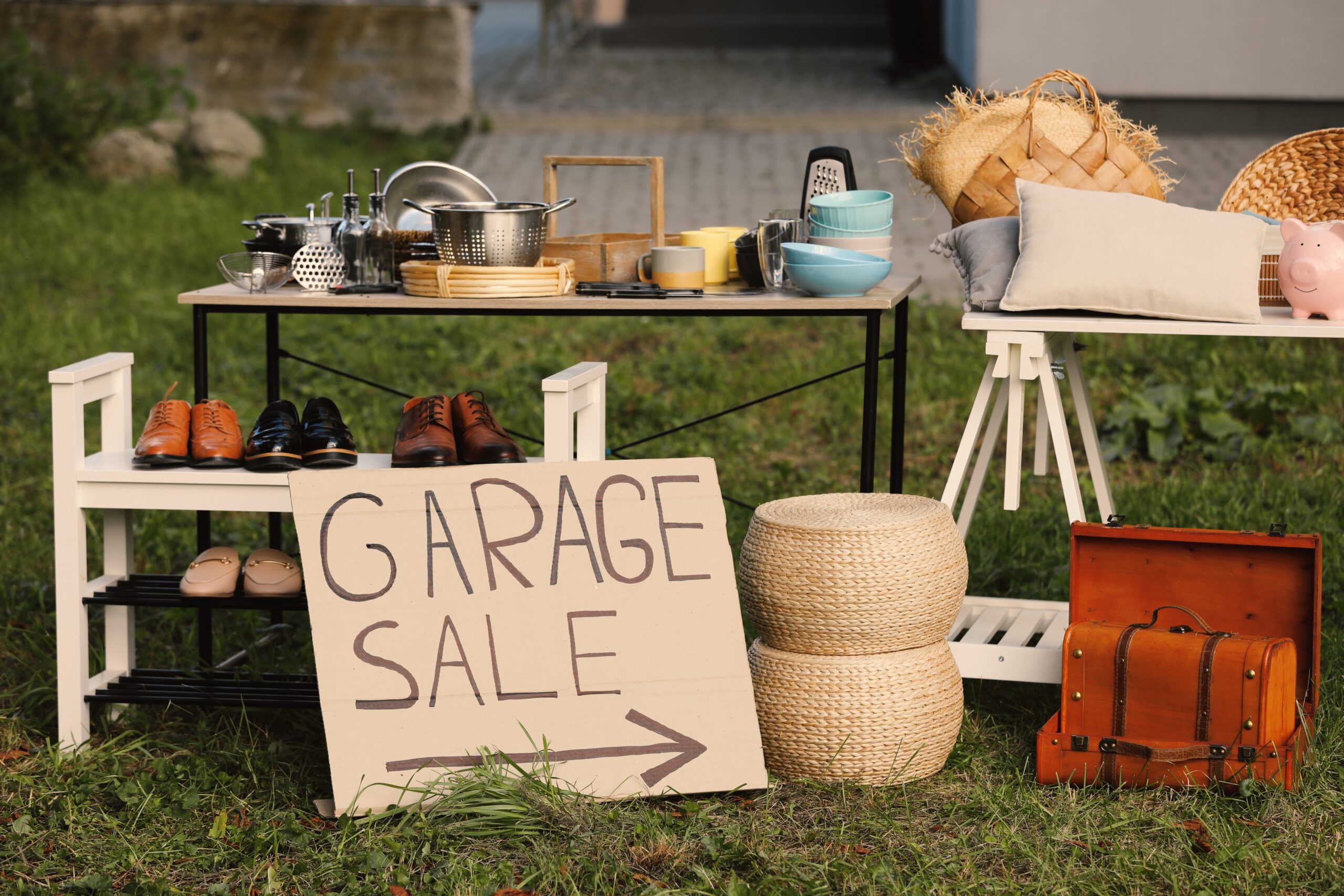
Even when a child moves out, the boxes, the trophies, and the bins of winter clothes often don’t. For a lot of parents, a grown child’s old bedroom still works full time as a storage unit, and no move-out date is in sight. We surveyed 1,048 parents who store belongings for an adult child who has moved out, and most of them don’t expect to get that space back. Nearly three in five (59%) said they think their grown child’s things will never leave the house.
We looked at how much space those belongings take up, how long they sit untouched, and who’s actually keeping them around. The answers say a lot about the housing squeeze younger adults face, and about the balancing act playing out in millions of spare rooms and garages. If any of this sounds like your place, you’re not alone.
Article takeaways
- 41% of parents store the equivalent of an entire room or more of a grown child’s belongings.
- The average grown child’s stash has sat untouched for about 2.2 years.
- 66% of parents admit they are the reason the stuff stays, not their kid.
- 86% of parents would feel guilty getting rid of a grown child’s things without asking first, yet 33% have already donated, tossed, sold, or handed some off without telling them.
- 11% of parents would ask their grown child to start paying for storage to get their space back.
The Boomerang Storage Index
Grown kids move out, but their belongings tend to boomerang into a permanent spot at home. For many parents that means handing over a whole room, and here is how much space it all takes up.

The overflow is real. More than two-fifths of parents (41%) stored the equivalent of an entire room or more, with 26% giving up a whole room and 13% surrendering part or all of the garage. To put that in perspective, a whole room’s worth of belongings is about what fits in a 10×10 storage unit. That’s roughly the footprint of a standard 100 square foot room, so a quarter of parents have effectively turned a bedroom-sized piece of the house into long-term storage. On average, a grown child’s belongings took up 15% of a parent’s total home storage, so just over one out of every seven cubic feet at home belonged to someone who does not live there anymore.
Most of it doesn’t move. The average stash sat untouched for about 2.2 years, and one-fifth of parents (20%) had things that hadn’t been touched in more than five years. Homeowners carried the heaviest load, with 44% storing a full room’s worth or more, compared with 33% of renters.
As for what’s actually in there, keepsakes led the pile. Three in four parents (75%) held onto childhood keepsakes, followed by clothing and shoes (61%) and books and textbooks (51%). And 4% of parents admitted they don’t even know what’s inside some of the boxes, which is its own good argument for a sort-through.
How Long Is Too Long?
The longer things sit, the less likely they are to ever move, and for many families there is a clear point where temporary turns permanent.

Most parents have made peace with keeping their items permanently. A clear majority (59%) expected their grown child’s belongings to never leave the house. The tipping point landed in the late twenties, as the share of belongings left untouched for three or more years climbed steadily with the child’s age:
- Ages 18 to 24: 9%
- Ages 25 to 29: 33%
- Ages 30 to 34: 50%
- Ages 35 and up: 63%
Parents are usually the ones holding on. Two in three (66%) said they’re the reason the stuff stays, not their kid. Most simply hadn’t pushed the child to take it (46%), and one in five just liked having the things around (20%). Only 9% blamed a kid who won’t come get it. That attachment shows up in frozen bedrooms too, where 50% of parents of 18-to-24-year-olds kept the room exactly as it was left, versus 15% of parents of kids 35 and up.
Even so, plenty of parents take matters into their own hands. One in three (33%) have donated, tossed, sold, or handed off some of a grown child’s things without telling them, most often by throwing a few items away (22%) or donating them (17%). The money squeeze kept the rest in place, as 55% of parents whose child can’t afford more space expected the belongings would never leave. On top of that, 57% felt an adult child should never lose free storage at a parent’s home.
What Holding on Costs, and How to Get the Space Back
Keeping a grown child’s things isn’t free, because it costs space and sometimes real money.

Given the choice, most parents would love their space back. More than half (56%) would happily hand it all back to their child to reclaim the room. When asked what they’d actually do to get there, 11% would ask the child to pay for storage, 8% would pay for a unit themselves, and 7% would split the cost. For families where the room is the sticking point but the keepsakes are worth protecting, a dedicated unit moves the overflow out of the house while keeping the sentimental items safe and accessible.
The real holdup is where the stuff would go. Half of parents (50%) said the belongings stay because their grown child has nowhere to put them, whether the place is too small, too pricey to upgrade, or too hard to move to. Among parents whose child rents with roommates, 53% said the child’s place is simply too small for their own things.
Emotional attachment plays a role too. A large majority (86%) would feel guilty getting rid of a grown child’s things without asking first, 45% felt the child still has a claim to their old bedroom, and 33% admitted keeping it is more about them than the kid. For 11% of parents, the cost of storing these belongings has already passed the value of what’s being stored. When parents picture the room empty, they want it back as a guest room (42%), a home office (25%), or just a breathing room and less clutter (25%).
When “I’ll Grab It Soon” Becomes Permanent
The pile in a grown child’s old room is rarely about clutter alone, because it tracks a real affordability squeeze that keeps younger adults in smaller, pricier first apartments and their belongings parked at home by default. If you’re staring down a frozen bedroom or a taken-over garage, the fix usually starts with a straight conversation about what stays, what goes, and where the overflow lands. From there, a few steps make the reset stick:
- Move out what you’re keeping but not using. With the average stash sitting untouched for about 2.2 years, the belongings clogging a bedroom or garage are usually the best candidates for a unit, freeing the room without forcing anyone to part with anything.
- Sort before you store, so you only pay to keep what actually matters. With 4% of parents unsure what’s even in the boxes, an afternoon of triage often shrinks the pile before anything leaves the house.
- Right-size the unit to the load. A closet’s worth of keepsakes fits a 5×5, a large closet or half a room fits a 5×10, and a full room generally calls for a 10×10, so you’re not paying for space you don’t use.
- Protect the sentimental stuff. Climate-controlled units keep photos, documents, and childhood keepsakes, the single most-stored category at 75%, from warping or fading in an attic or garage.
For a lot of families, a little breathing room at home is one good sort-through and the right-sized unit away.
Methodology
Storage.com surveyed 1,048 U.S. parents who currently store belongings for at least one adult child who has moved out of their home. Respondents who reported storing no belongings were screened out. Parents who had left things behind for more than one adult child were asked to answer about the single child who had left the most.
The survey was fielded via CloudResearch Connect and Prolific in July 2026. Respondents ranged in age from 26 to 86, with an average age of 55, and all were adults. The sample was 72% women and 27% men, and skewed toward Gen X (56%) and baby boomers (26%), with millennials making up 18%.
Where results are broken out by the child’s age, 16 respondents (2%) who reported a child under 18 were excluded from those breakouts as inconsistent with the adult-child premise but remain in all overall figures.
For questions allowing multiple selections, percentages reflect the share of respondents who chose each option and can total more than 100%. Percentages not totaling 100% are due to rounding. Averages for open-ended numeric questions were calculated after removing statistical outliers using the interquartile range method. Demographic subgroups are reported only where they represent at least 5% of respondents.
About Storage.com
Storage.com makes finding the right storage unit the easy part of any move or home reset. With one of the largest inventories of storage units online, we help you compare nearby facilities, sizes, and prices, then reserve a unit in minutes. Whether you need a 5×5, the size of a small walk-in closet, or a 5×10 that holds a small room’s worth of boxes, you can find and reserve a unit near you at a price that fits.
Fair Use Statement
You are welcome to share these findings for noncommercial purposes. We just ask that you link back to this page so readers can see the full study and that you credit Storage.com for the research.